

The Fall Migration
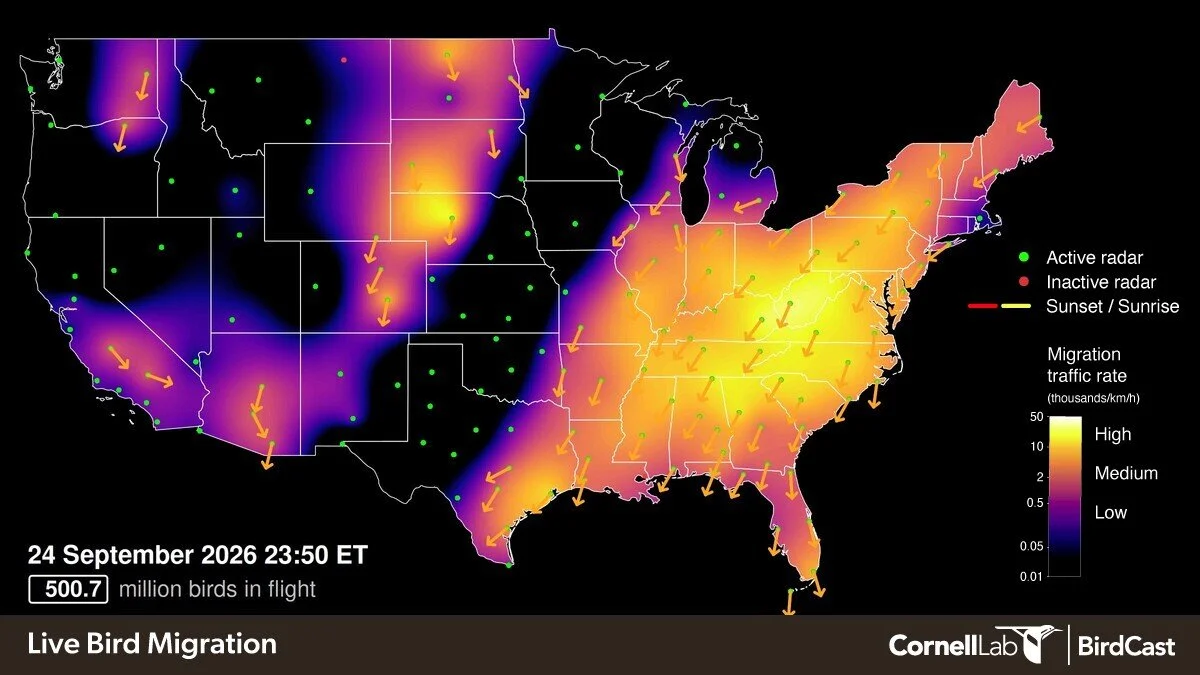
Live Bird Migration Map from birdcast.org
Millions of birds are traveling through Ohio this fall, many passing over Hocking Hills while we sleep.
It’s early October here at BloomSky Farm. The days are getting shorter, the woods are beginning to show their autumn colors, and we’re almost finished prepping the farm for winter. While the flower season is mostly over, an extraordinary amount of activity is taking place in the skies above us.
Fall migration is underway, with millions of birds traveling south through Ohio toward wintering grounds in the southern United States, Central America, the Caribbean, and South America.
Most of these travelers pass unnoticed because they’re flying at night.
I’ve loved wild birds for as long as I can remember. I’m not a scientist or ornithologist—just someone who enjoys watching the birds around our farm, learning their songs and habits, and noticing who visits as the seasons change.
One spring, I volunteered during migration at Black Swamp Bird Observatory in northwest Ohio. I’ve also attended The Biggest Week in American Birding, where the variety of warblers along Lake Erie is remarkable. Those experiences deepened my interest in the journeys these small birds make and the work being done to understand them.
Nearly three million birds in one night
One of the most fascinating developments in bird research is the use of weather radar to track migration. Through BirdCast, scientists can estimate how many birds are traveling overhead, along with their direction, speed, and altitude. The numbers are astonishing.
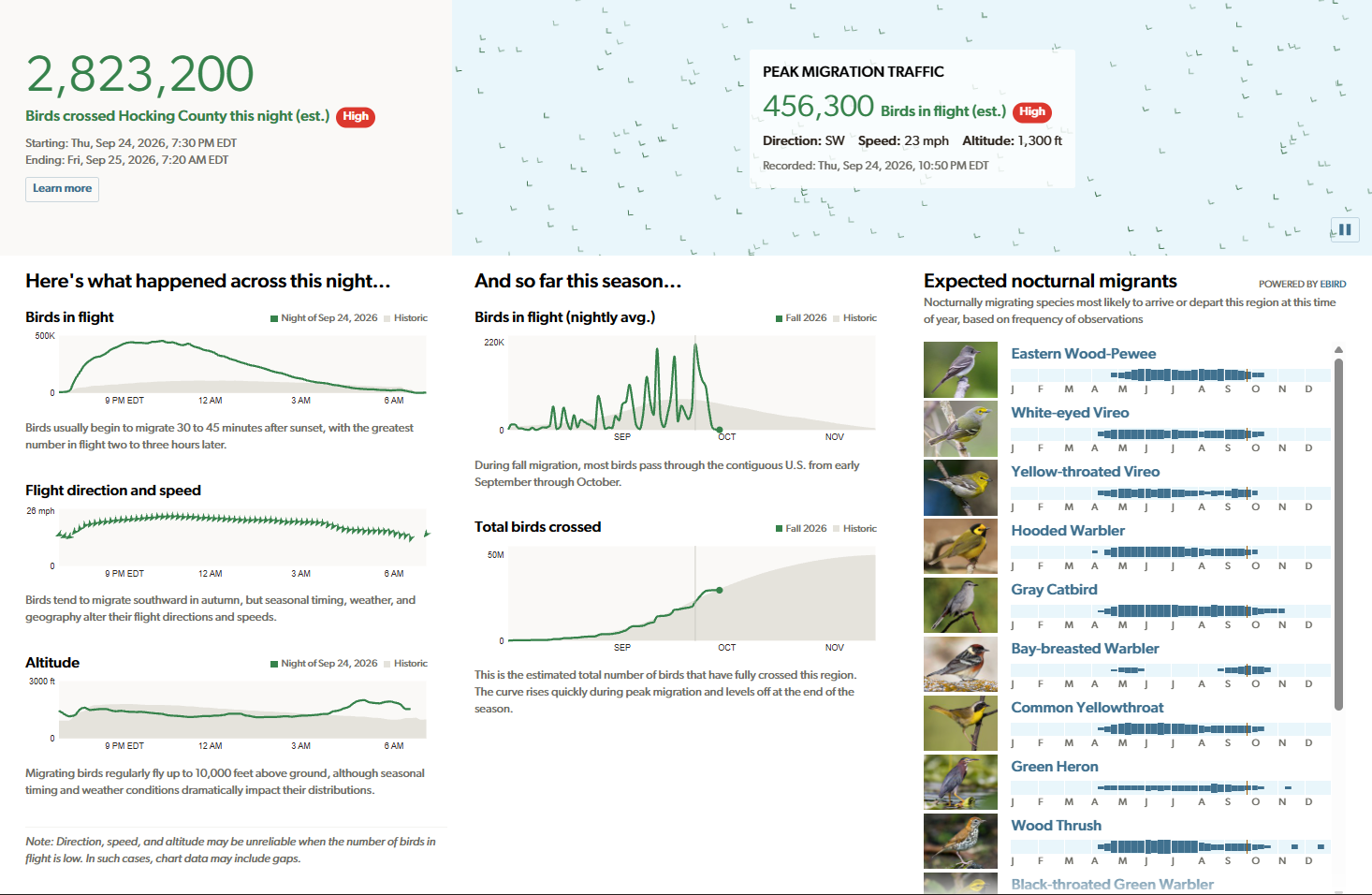
September 24, 2026 bird migration statistics from birdcast.org
On the night of September 24, 2026, BirdCast estimated that 2,823,200 birds crossed Hocking County. At the peak of migration, around 10:50 p.m., approximately 456,300 birds were in flight overhead, traveling southwest at an average speed of 23 miles per hour and an altitude of roughly 1,300 feet. Nearly three million birds over our little corner of Ohio in a single night!
BirdCast identifies September 9 through October 7 as Hocking County’s historical peak period for fall migration. While we’re sleeping, the sky above Hocking Hills may be filled with warblers, thrushes, vireos, flycatchers, and sparrows heading south.
Many migratory songbirds begin moving shortly after sunset. Traveling at night helps them avoid the heat of the day and leaves daylight hours for feeding and resting.
Some birds continue well beyond southeastern Ohio. Others descend into our woodlands, fields, and gardens to rest and replenish their energy before continuing.
For birds weighing less than a mini muffin, these journeys are extraordinary feats of endurance.
Who’s passing through Hocking Hills?
Fall is an especially interesting time to watch the woods and woodland edges around Hocking County.
During September, migrating Magnolia, Tennessee, Nashville, and Black-throated Green Warblers may pass through. By late September and October, Ruby-crowned and Golden-crowned Kinglets become more noticeable, along with Yellow-rumped Warblers and sparrows such as White-throated Sparrows.
Thrushes also move through our forests during autumn. Swainson’s Thrushes, for example, breed in northern forests and travel through Ohio toward wintering areas in Central and South America.
Not every bird we see is migrating. Northern Cardinals, Carolina Wrens, chickadees, woodpeckers, and other familiar residents remain active as the seasons change. On any given morning, they may be joined by visitors that weren’t there the day before.
To see which birds are being reported locally, visit eBird’s Hocking County dashboard. You can explore local sightings, discover birding areas, and record observations of your own. Even common birds are worth reporting; observations collected over time help researchers understand changes in bird populations and seasonal movements.
They’ll be back in spring
As fall migration winds down, another great movement is only a few months away.
Spring migration builds throughout April and continues through May. Birds return north toward their breeding grounds, often wearing brighter plumage and singing the songs used to establish territories and attract mates.
Northwest Ohio is a popular destination for birdwatchers, especially along the southern shore of Lake Erie. At places like Magee Marsh, it’s possible to see an impressive variety of warblers, orioles, tanagers, vireos, and other songbirds in a relatively small area.
The Biggest Week in American Birding takes place May 7–16, 2027. It’s a wonderful introduction to birdwatching, with knowledgeable guides, educational programs, and plenty of opportunities to meet other bird enthusiasts.
Closer to home, Hocking Hills and Clear Creek also offer excellent opportunities to observe spring migration. Some species are passing through, while others return to our forests to nest and raise their young.
If you’ve ever been curious about birdwatching, spring is a particularly enjoyable time to begin.
A little help along the way
Migrating birds face hazards including storms, artificial lighting, habitat loss, and collisions with buildings. There are a few simple things we can do to help.
Turn off unnecessary outdoor lights. Artificial lighting can attract and disorient birds migrating at night. Reducing exterior lighting, closing blinds, and using downward-facing fixtures can make a difference, especially during heavy migration.
Provide food and fresh water. Clean feeders, native plants, and a shallow source of fresh water can help birds refuel. Clean feeders and water sources regularly to reduce the spread of disease.
Make windows safer. Birds often mistake reflections of trees and sky for open habitat. Exterior screens and closely spaced markings on glass can help prevent collisions.
And perhaps most importantly, spend time observing the birds around you. Learn to recognize a few species, notice when they arrive and depart, or participate in community science projects such as eBird, Project FeederWatch, or the Great Backyard Bird Count.
Learning more at BloomSky
This year, we’ve been fortunate to welcome researchers conducting bird-banding studies at BloomSky Farm. It’s been fascinating to get a closer look at the birds that share our property, from familiar residents to seasonal visitors.
Bird banding helps scientists study migration, survival, habitat use, and changes in bird populations. It can also support research into the relationships between birds, ticks, and the pathogens they may carry.
In upcoming articles in our Ohio’s Wild Birds series, I’ll introduce the bird-banding work taking place here and the people conducting it.
In the meantime, fall migration continues.
If you have a few minutes tomorrow morning, take a walk through your yard or a nearby wooded area. Watch for movement among the leaves, listen for unfamiliar calls, and notice which birds have arrived or disappeared as the season changes.
And if you’re curious about what’s happening above Hocking Hills tonight, visit the BirdCast Hocking County dashboard. There may be far more activity overhead than you ever imagined.
