

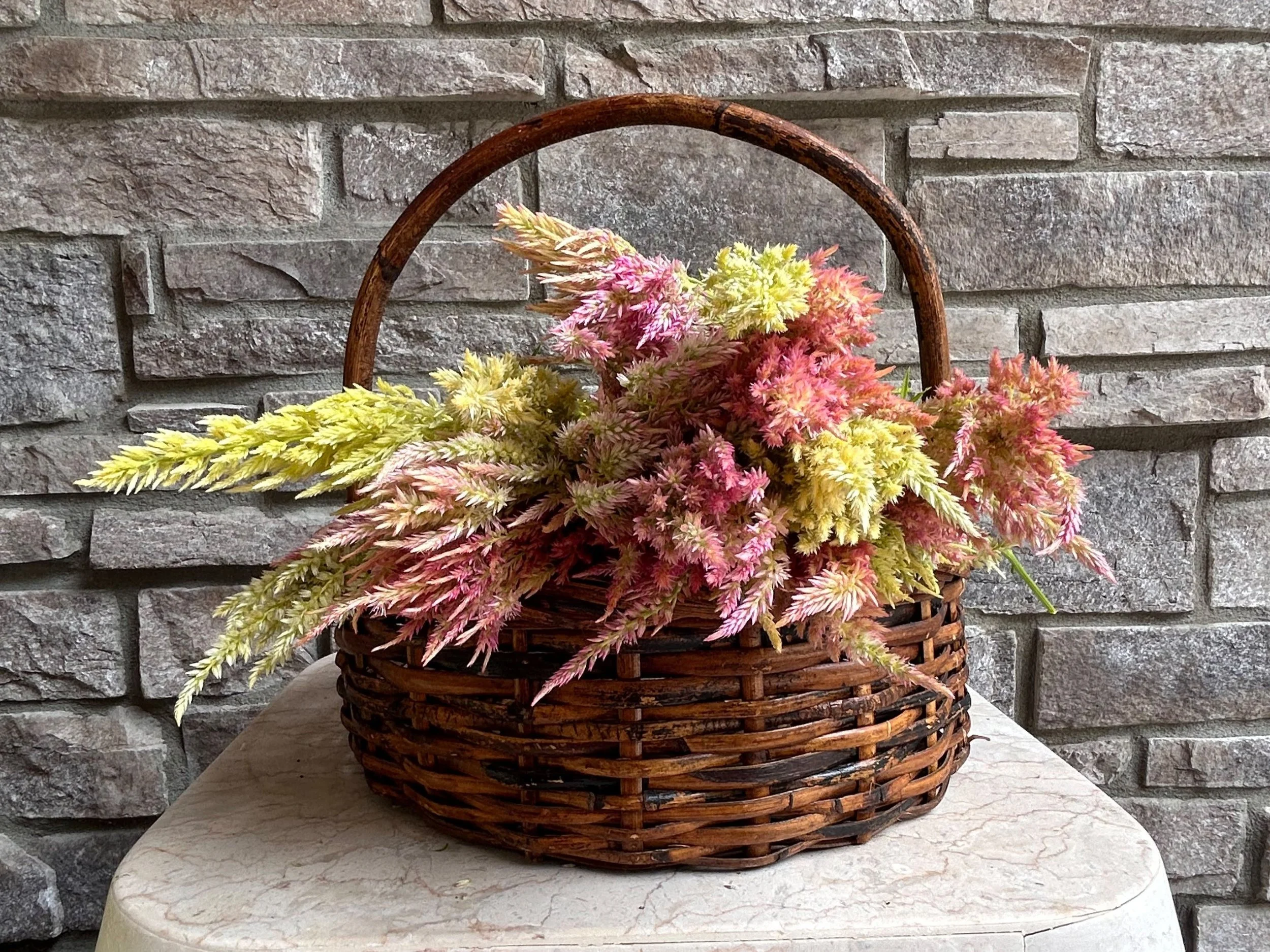
Celosia is one of the more unusual flowers we grow at BloomSky, and it's always interesting to watch people encounter it for the first time. Some varieties look like little flames, others like coral, and the big crested varieties look remarkably like brains. I can't think of many other flowers that offer quite so much variety in one plant family.
The bees absolutely love it, which is one of my favorite things about growing celosia. On a warm day, there's often a great deal of activity around the blooms, and I find myself stopping to watch them when I'm supposed to be doing something productive. Fortunately, celosia also happens to be a wonderful cut flower, so the bees and I have at least one thing in common.
And, blessedly, the deer don't seem particularly interested in it. After the summer we've had with wildlife, I consider that a significant selling point.
I love growing celosia because it brings such interesting shapes and textures into our bouquets, particularly later in the summer when the dahlias and zinnias are blooming. It comes in an extraordinary range of colors, from soft pinks and creams to deep burgundy, orange and almost electric red, and depending on the variety, it can be a focal flower or something that fills the spaces between larger blooms.
It's also a flower with a much longer history than most people realize.
A Little History of Celosia
Celosia has been grown for centuries in tropical regions, particularly Africa and Asia, where some types are cultivated as leafy vegetables as well as ornamentals. The young leaves and shoots of certain varieties are eaten in parts of West Africa, and the plant is valued for much more than its flowers.
The name comes from the Greek word kelos, meaning burning, which makes sense when you see some of the brilliantly colored plume varieties. They really do look a bit like flames.
Most of the celosia we grow for cut flowers falls into three recognizable groups, although the differences between them are so pronounced that you might not realize they're closely related.
Three Types of Celosia
Spike Celosia
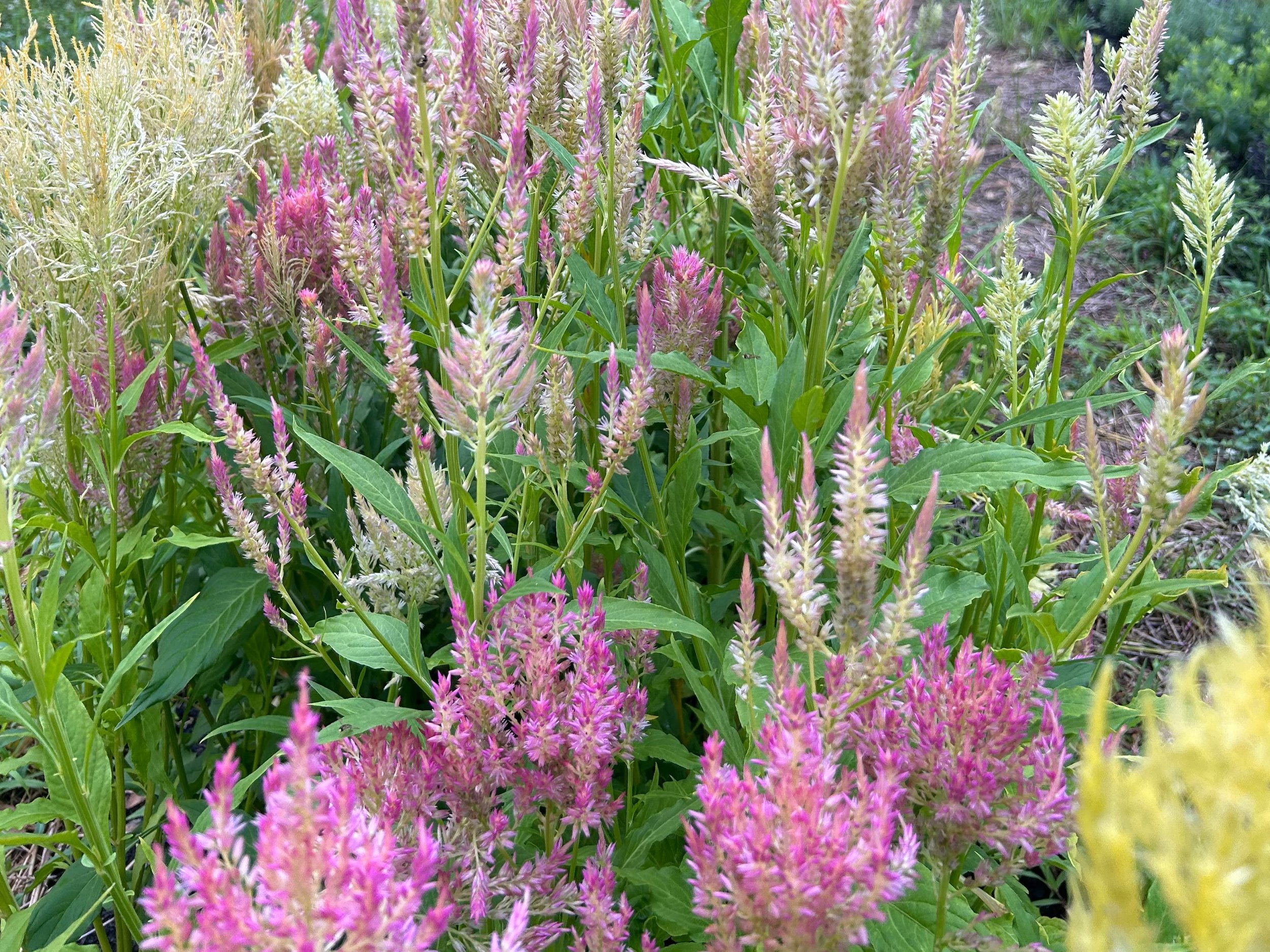
Spike celosia has long, narrow blooms that taper toward the top, often in shades of pink, lavender, cream and burgundy. It's probably the most understated of the three types, although some varieties can grow quite tall and produce substantial stems.
I particularly like spike celosia for its shape. When you're arranging a bouquet with lots of round flowers, such as dahlias and zinnias, a few upright spikes give the arrangement some height and variety without making it feel crowded.
Many spike varieties also dry beautifully, retaining much of their shape and color when harvested and dried properly.
Cockscomb Celosia
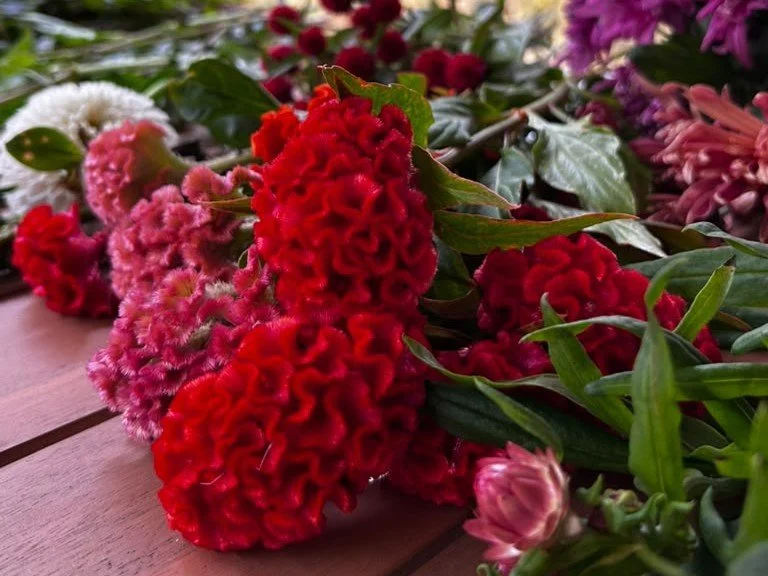
This is the celosia that gets the most interesting reactions from people.
Often called brain celosia, the crested or cockscomb varieties produce broad, velvety flower heads with folds and ridges that resemble coral, a rooster's comb or, rather unmistakably, a brain.
I grew cockscomb for the first time this year, and it quickly became one of my favorites. What surprised me most was how beautifully it anchors a bouquet. Its substantial shape gives the other flowers something to work around, particularly when you're arranging softer, rounder blooms like dahlias and zinnias.
I used cockscomb in a very special bridal bouquet last weekend, and it turned out beautifully. The celosia gave the arrangement a richness and structure that I loved, without overwhelming the other flowers. After seeing how well it worked, I already know I'll be growing more of it next year.
Cockscomb comes in an astonishing range of colors, including burgundy, crimson, orange, yellow and pink. I especially like the darker varieties in late-summer arrangements, where they work beautifully alongside dahlias and other richly colored flowers.
Plume Celosia
Plume celosia produces the feathery, upright flower heads that many people associate with the plant. Depending on the variety, they can be compact and dense or tall and wonderfully loose.
The colors are often quite vivid, with reds, oranges, golds and pinks being especially popular, although there are softer varieties that work beautifully in more muted arrangements.
Plume celosia is useful because it can play several different roles in a bouquet. Larger stems can become focal flowers, while smaller ones add color and texture around dahlias, zinnias and other summer blooms.
Why We Love Celosia in Bouquets
One of the things I've learned about arranging flowers is how much difference texture makes. You can put together a beautiful bouquet using only dahlias and zinnias, but adding something with an entirely different shape can change the arrangement considerably.
Celosia is particularly good at that because each type contributes something different. The spikes add height, the plumes bring a softer shape, and the cockscomb varieties can become the most interesting flower in the entire bouquet.
I also appreciate that many varieties can be dried. We've been exploring more ways to use flowers beyond their fresh vase life, and celosia gives us some interesting possibilities for dried arrangements and wreaths.
Growing Celosia at BloomSky Farm
Here in Hocking Hills, Ohio, we grow celosia as a warm-season annual. We start our plants from seed and transplant them into the field after the danger of frost has passed and the soil has warmed.
Celosia loves summer heat, which makes it particularly useful during the hotter parts of our growing season. It prefers good drainage and doesn't appreciate cold, wet conditions, so timing and site selection matter.
Depending on the variety, celosia can produce substantial stems suitable for cutting, and some types will continue producing additional flowers after the first harvest. Others, particularly certain large cockscomb varieties, are grown primarily for their main bloom.
We harvest according to the variety and the stage of flower development, looking for blooms that have developed their intended shape and color without becoming overmature. Once cut, we remove foliage that would sit below the waterline and condition the stems in clean water.
Celosia can be sensitive to excessively cold storage, so handling it properly is important, particularly when we're preparing flowers for an event.
How to Care for Cut Celosia at Home
Celosia is relatively easy to enjoy as a cut flower, although keeping the water clean is especially important because its stems can deteriorate if left sitting in dirty water.
Start with a thoroughly cleaned vase and fresh water.
Remove any foliage that would sit below the waterline.
Recut stems with clean, sharp snips before arranging.
Refresh the water regularly, ideally every day or two.
Keep arrangements away from direct sunlight, heating vents and excessive heat.
If you'd like to dry the flowers, select blooms while they're still in good condition and hang them upside down in a dry, well-ventilated space away from direct sunlight.
With good care, many cut celosia varieties can last around a week or longer, although vase life depends on the variety, harvest stage and conditions in your home.
Dried celosia can last for months and sometimes considerably longer when protected from moisture and strong sunlight.
Looking Ahead to Next Season
Celosia was among the crops that suffered when the groundhogs decided BloomSky was their personal salad bar this summer. We lost thousands of seedlings across several crops, including celosia, zinnias and sunflowers, and I spent a ridiculous amount of time wondering what would still be growing when I walked out to the field the following morning.
Fortunately, some of our celosia survived, and this year's experience gave me several good reasons to grow more of it. The bees love it, the deer seem happy to leave it alone, and my first season with cockscomb showed me how useful those wonderfully peculiar blooms can be in a bouquet.
We're finished with our regular cutting season for 2026, but I'm already thinking about next year's varieties and planting plans. Cockscomb has earned considerably more space in the field, assuming I can persuade the groundhogs that it isn't theirs.
Given their performance this summer, I don't expect that negotiation to be particularly productive.
