

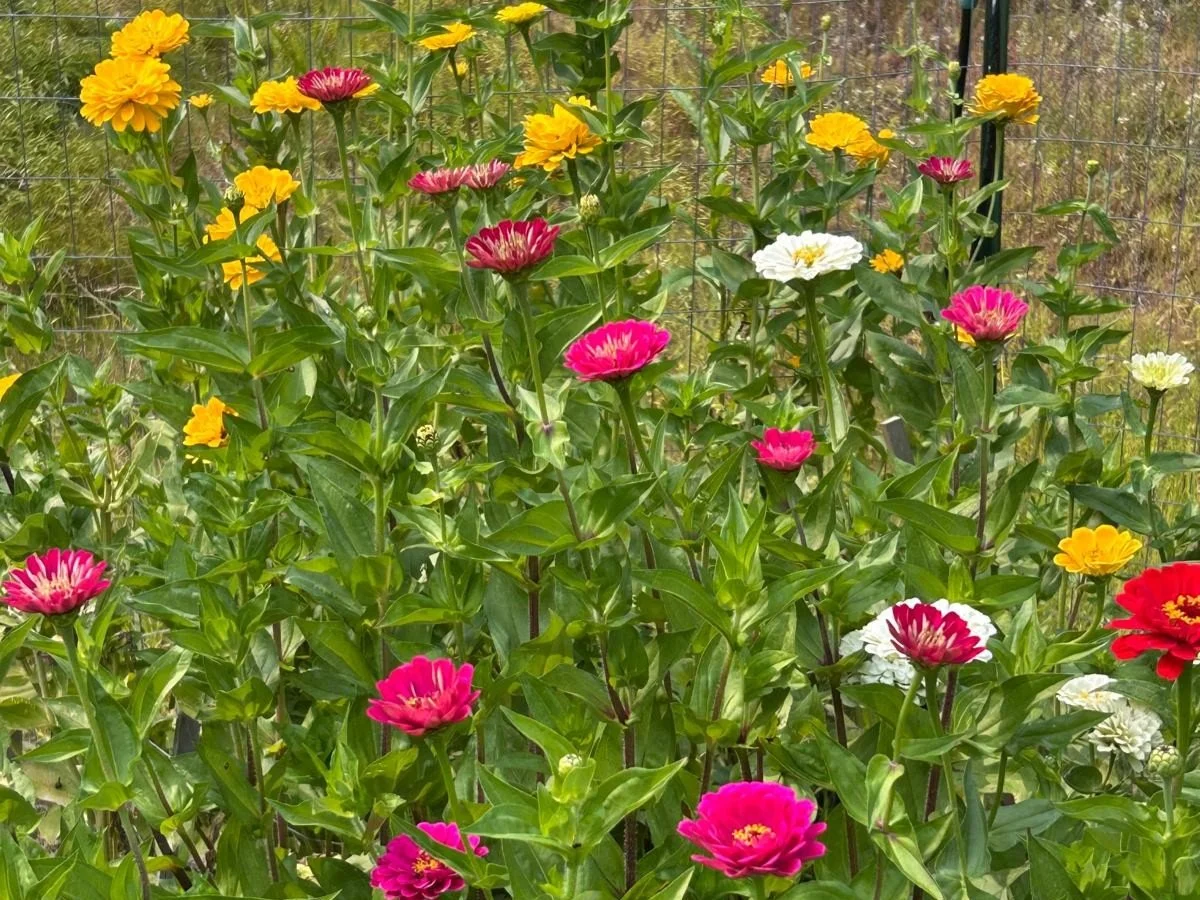
We have always had groundhogs here at BloomSky Farm, and until this year our relationship had been reasonably cordial. They lived here, we lived here, and aside from the occasional disagreement over what constituted their property, we managed to coexist, which I now realize was probably because they were quietly building an evil dynasty and waiting for me to plant enough food to make their efforts worthwhile.
This summer, they ate their way through over 5,000 seedlings, including sunflowers, zinnias, celosia and quite a few other things I had started from seed, nurtured under lights, hardened off, planted and watered before thoughtfully providing them as a very expensive groundhog salad.
At first I didn't realize the scale of what was happening because losing a few seedlings isn't particularly unusual here. We grow flowers in the middle of the woods, and rabbits, deer and all sorts of creatures wander through the field, so I tend to accept a certain amount of sharing. That philosophy became considerably less charming when I started walking out in the morning and finding entire sections missing.
The sunflowers were especially popular. I'd plant hundreds of seedlings and come back to find them neatly clipped to the ground, and when we replanted, the groundhogs apparently considered this excellent service and returned for another course. Zinnias and celosia joined the menu soon afterward, and every time I thought we'd figured out what they liked, they demonstrated an admirable willingness to try new things.
Eventually we started seeing groundhogs everywhere, including babies, and it became clear that this wasn't one particularly ambitious animal. We had apparently established a multigenerational dining destination where the food was locally grown, regularly replenished and, thanks to the farmer, arranged in convenient rows.
As if feeding an entire groundhog dynasty wasn't enough, we also made the very serious mistake of taking down the deer fence. There were reasons at the time, although none of them seem especially persuasive now, and the deer apparently interpreted its removal as a formal invitation to come see what the groundhogs had left behind.
Once the groundhogs had finished working at seedling height, the deer took care of anything that managed to get taller. Plants that had somehow survived the first assault began disappearing from the top down, and I would walk out in the morning to find another section looking as though someone had gone through it with hedge clippers.
The rabbits, perhaps concerned they weren't contributing enough to the overall effort, concentrated on the hydrangeas. I had always thought of hydrangeas as fairly substantial plants and not something a rabbit could destroy with any particular efficiency, which turned out to be another of my incorrect assumptions about wildlife. By midsummer we had a surprisingly effective division of labor, with the groundhogs handling seedlings, the deer taking anything that achieved height and the rabbits specializing in hydrangeas, while I financed the entire operation.
What makes all of this particularly ridiculous is that I had planned the season quite carefully. I had spreadsheets and succession schedules, knew approximately how many sunflowers I wanted blooming each week and when each planting needed to go into the ground, and had zinnias and celosia planned for summer bouquets, Flowers for Good and fall cutting. In January it all looked quite achievable because I had neglected to include a column in the spreadsheet for "consumed overnight by an evil dynasty of groundhogs."
That became something of a theme for 2026, when I would make a perfectly reasonable plan and the universe would look at it with interest before deciding how much interference it could introduce before I reconsidered the whole enterprise. We missed planting windows because work was busy, the groundhogs ate thousands of seedlings, we removed the deer fence in an act of extraordinary optimism, the deer thanked us, the rabbits ate the hydrangeas, torrential rain arrived in August, and then I hurt my back just as the field needed more attention than ever.
At some point, the growing season began to feel like a game of cosmic chicken in which I kept insisting I was going to have a flower farm and the universe kept finding increasingly creative ways to ask how committed I was to that position. It turns out I'm fairly committed, although I would appreciate it if next year's test involved fewer flower predators.
Despite everything, we grew many beautiful flowers. The zinnias that survived were wonderful, the lisianthus bloomed unbothered, the dahlias came along, and we had flowers for Grow to Give, Flowers for Good, bouquets and events. The field looked absolutely nothing like the one I had planned in January, but perhaps after three years of flower farming I should know better than to expect it to.
As I start making notes for next year, there are plenty of things I'll change, including planting some successions earlier and reconsidering where certain crops go. Most importantly, protections will be put in place, the deer fence will return, and I intend to develop a deep and lasting appreciation for it, regardless of how inconvenient or unnecessary it may appear at any particular moment.
I'm less certain what to do about the groundhogs. I assume they're somewhere below the field right now, pleasantly full, congratulating themselves on an extraordinarily successful summer and raising the next generation with detailed knowledge of exactly where the sunflowers are planted.
I'll be planning for them this time.
