

Flower Focus: Sunflowers
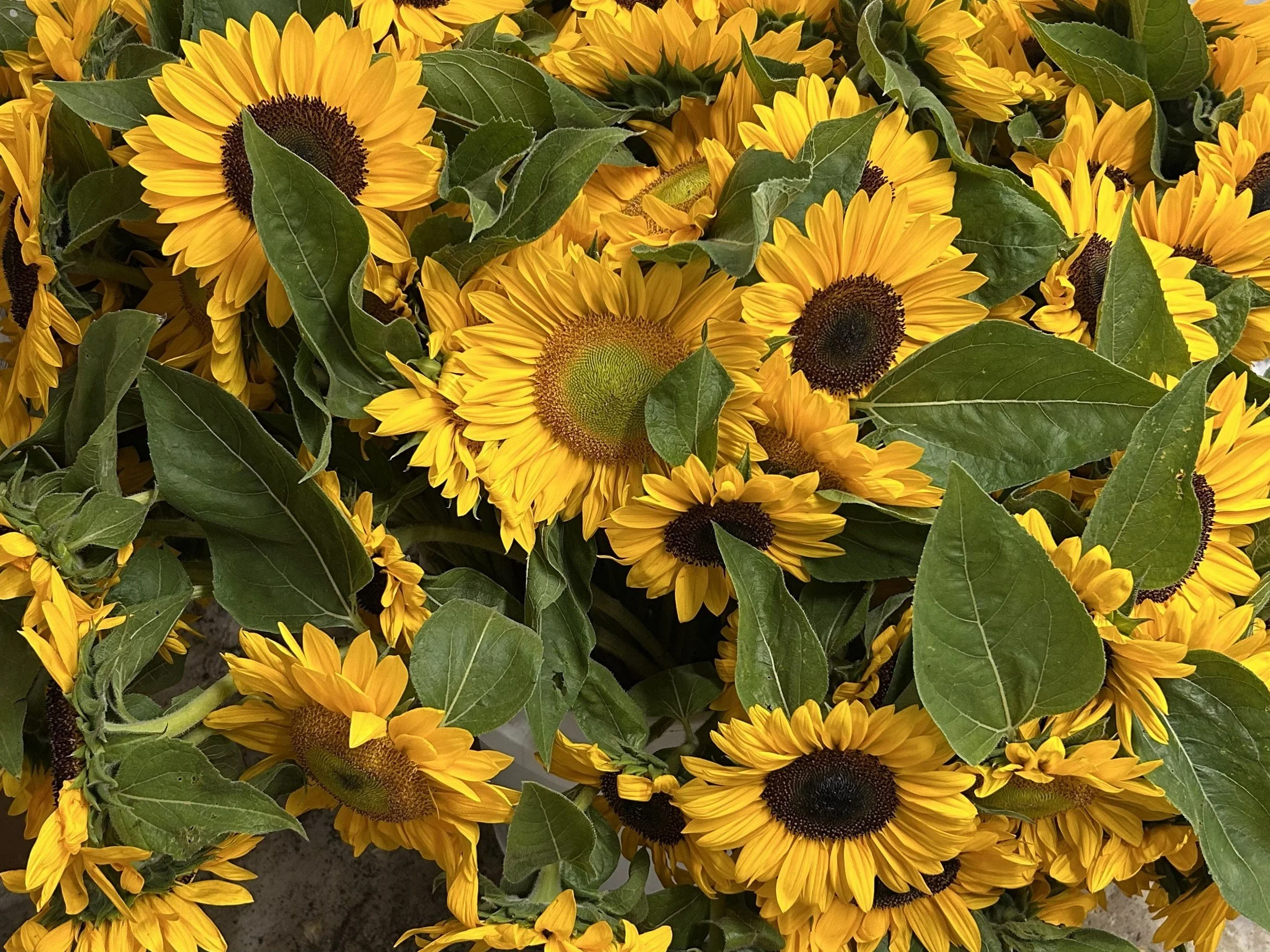
Every year, I look forward to August because then, I get to look forward to the sunflowers that are taller than everything else, facing the morning sun, lifting their happy faces to the morning sun, and reminding me to keep my heart open to the beauty around me. Some flowers you grow, tend, eventually cut, and that’s it. Sunflowers, on the other hand, demand to be looked at. They give so generously of their charm, but also their seeds, and we love to harvest seeds each fall to save and sow again for our own enjoyment.
This month, for Flower Focus, we’ll be talking about sunflowers. What they are, where they come from, the different types, how we grow and harvest them, and how to take care of them once they're home with you.
A Brief Sunflower History
Sunflowers are native to North America, which makes them unusual among the flowers we commonly grow because most of our familiar garden flowers trace their origins to Europe, Asia, or the Mediterranean. Indigenous peoples across the continent cultivated sunflowers for thousands of years, using the seeds for food and oil, the petals for dye, and for a range of practical purposes.
Spanish explorers brought sunflowers to Europe in the sixteenth century, where they were initially grown as curiosities before becoming valued for their oil. By the nineteenth century, Russia had become the center of sunflower cultivation and breeding, which is part of why so many of the large-seeded commercial varieties we know today trace their lineage back to Russian breeding programs.
Another interesting thing about sunflowers is that some research suggests sunflower roots and decaying plant material release natural compounds that can inhibit the germination or growth of certain weed species, also called allelopathy. As you can imagine, weed suppression is a very desirable feature!
In the language of flowers, sunflowers carry associations with loyalty, warmth, and longevity. They make me think of my children when they were little, and now, my grandchildren. My heart squeezes a bit with memories of them in the fields. The connection to the sun is the obvious one since they're named for it, they face it, and they seem to embody it. But there's also something in their scale and their sun-like features that people respond to. A sunflower in a vase or a centerpiece can change the vibe of the room.
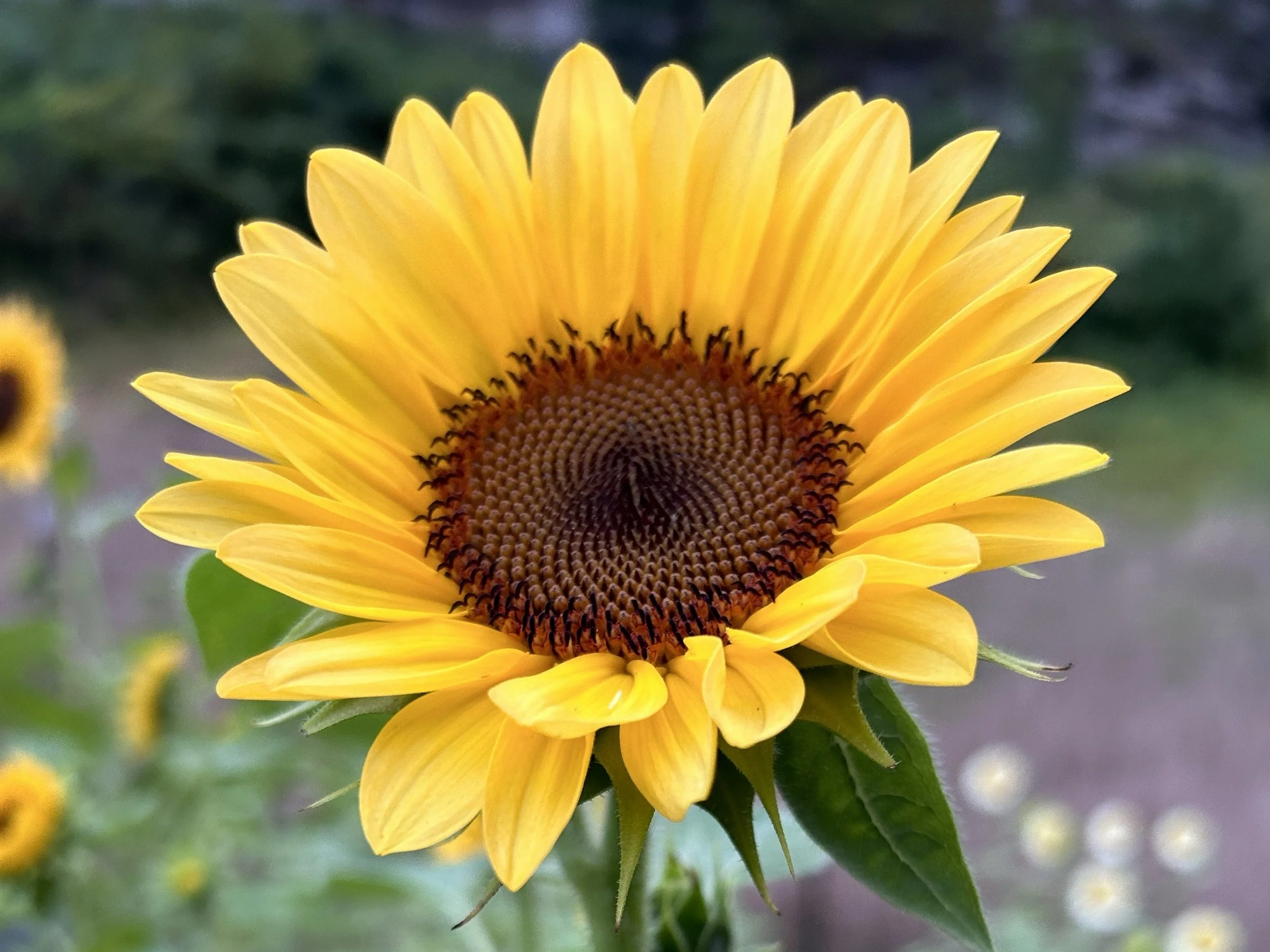
Heliotropism and Why Sunflowers Follow the Sun
Young sunflowers track the sun across the sky during the day. They face east in the morning and follow it west as the day goes by. This movement is called heliotropism and it's driven by uneven growth on either side of the stem, the shaded side growing faster than the lit side, which causes the plant to bend toward the light.
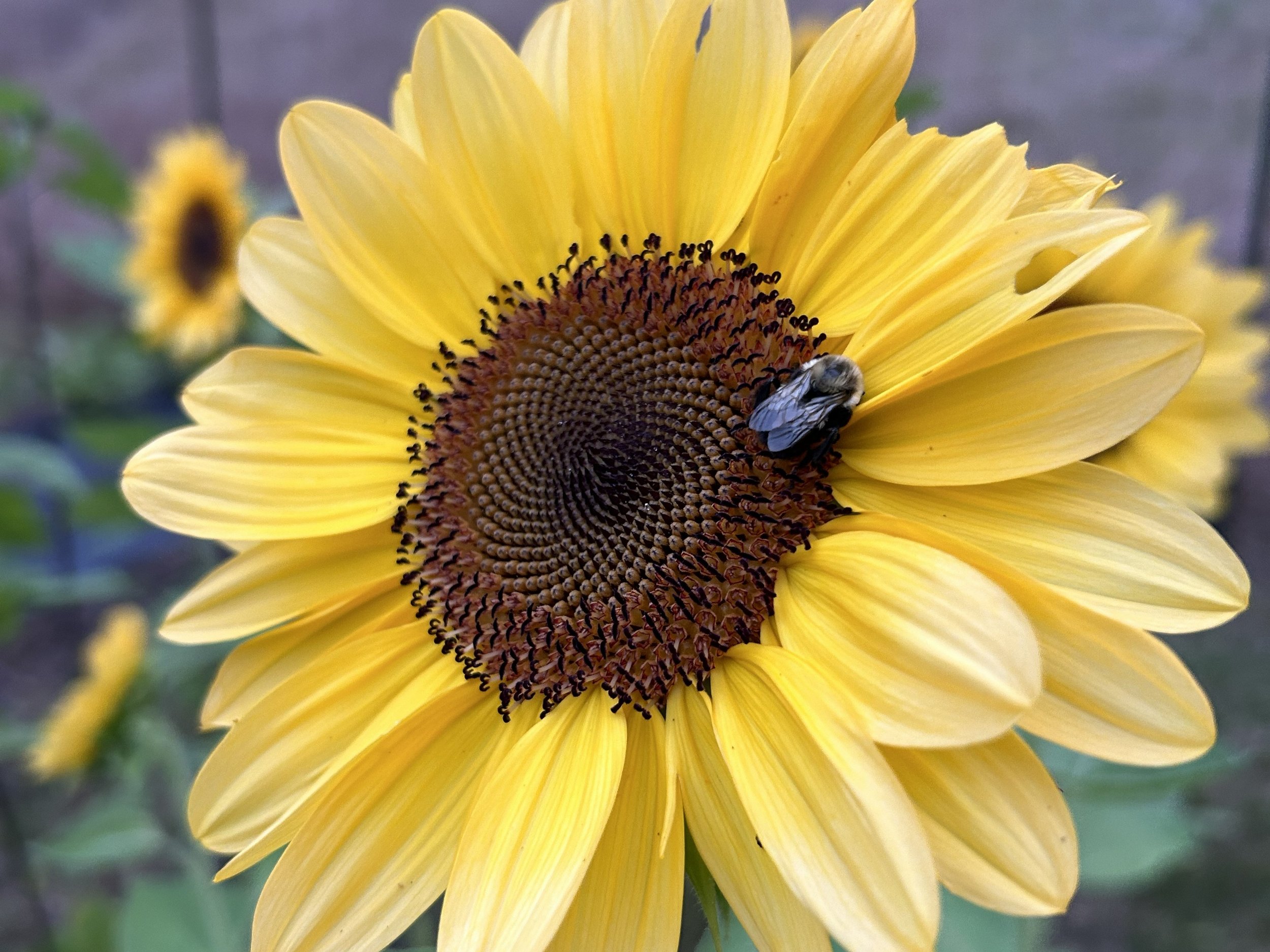
Once a sunflower matures and the stem hardens, the movement stops. Mature sunflowers tend to face east permanently, which is where the warmest morning light comes from. This is thought to attract more pollinators in the early part of the day when bee activity is highest.
Once you know that about sunflowers, you never really stop noticing it. Which is a big part of why I like watching their heads as they mature.
The Main Types of Sunflowers
Sunflowers vary considerably in size, form, and color, and the differences matter when you're choosing for arrangements.
Single stem varieties produce one large bloom per plant and are the classic sunflower most people picture. They're the most dramatic in an arrangement as they are tall, full-faced, and immediately recognizable. We grow several single stem varieties in different sizes and colors.
Branching varieties produce multiple blooms per stalk that develop as the main stem matures. They have a longer cutting window than single stems and give more bouquets volume. In an arrangement they feel a little looser and more gardenlike than the big single stems.
Dwarf varieties are shorter and more compact. Their smaller blooms work well in mixed arrangements where a full-sized sunflower would overwhelm everything around it. They're also great if you can only allot a small space for sunflowers in the field.
Dark center varieties have that classic yellow petal with a deep brown or near-black center. They're the most traditional looking and tend to be what people reach for when they want a sunflower that reads immediately as a sunflower.
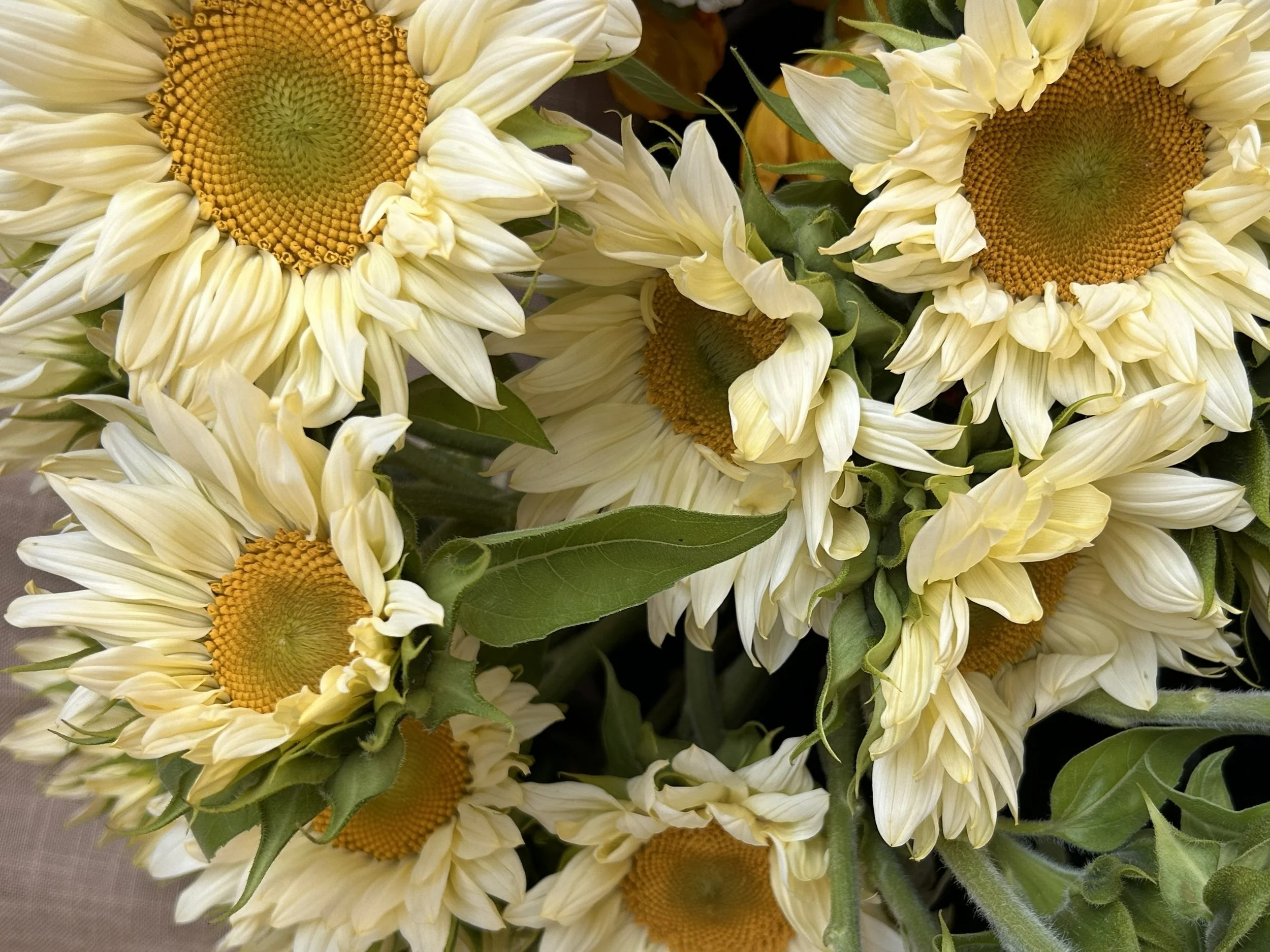
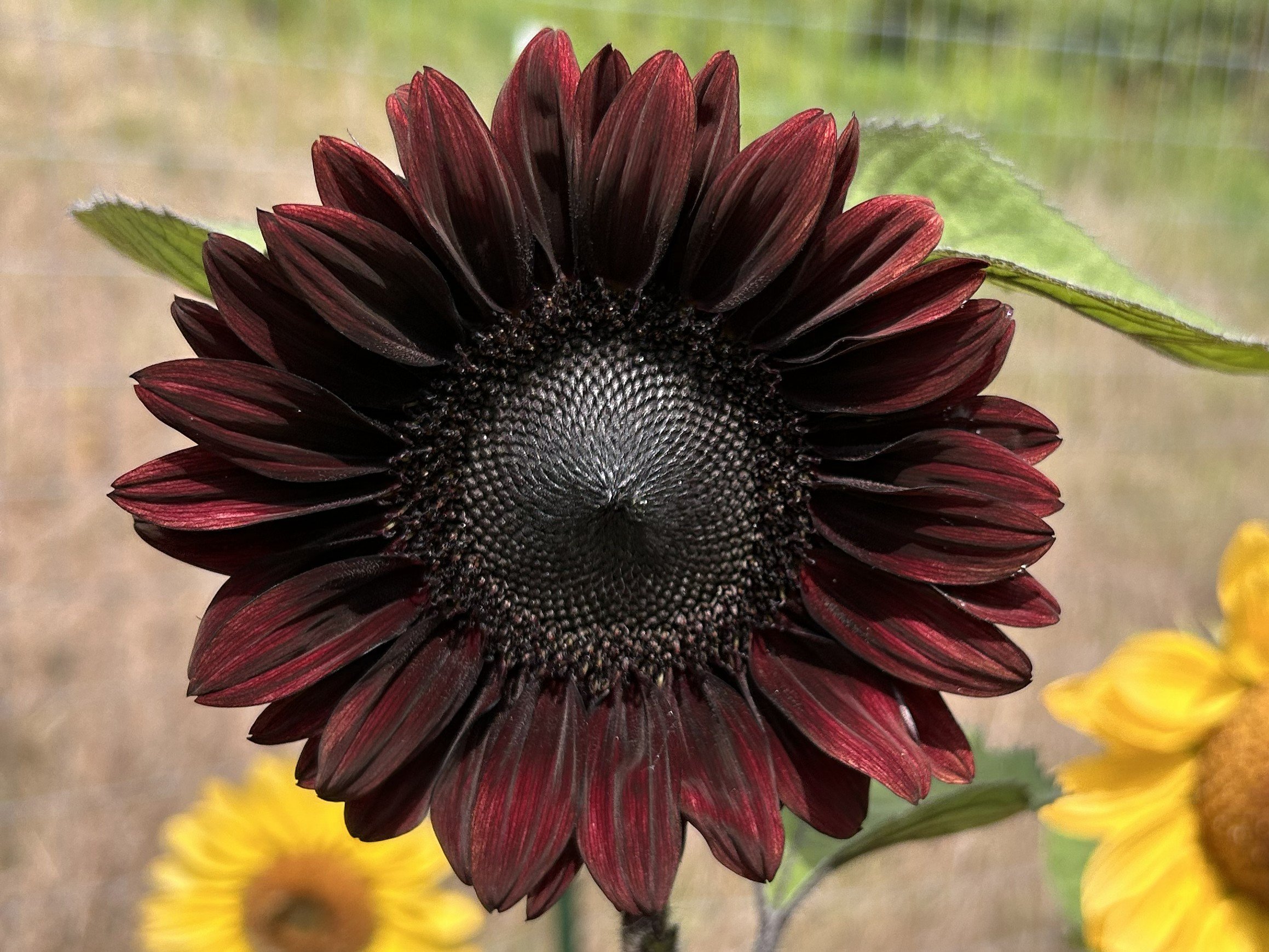
Specialty and novelty varieties include the bicolored types, the deep burgundy and rust varieties, and the pale lemon yellows that look almost unexpected for a sunflower. These tend to work well in late summer and early fall arrangements when the palette is shifting toward warmer, deeper tones.
How We Grow and Harvest Sunflowers at the Farm
Sunflowers are directly sown into the field after the last frost date. They're not started in trays — they prefer to go straight into the ground and they establish quickly once the soil is warm. We succession plant throughout the season, which means staggering planting dates every few weeks so that we have flowers coming in over a long window rather than all at once.
We harvest sunflowers at what we call the gooseneck stage: when the stem is still slightly bent and the petals are just beginning to lift away from the center. At that point the bloom will continue to open fully over the next day or two and the vase life will be at its longest.
After cutting, sunflowers go immediately into water. They're thirsty flowers and they make that clear quickly if they're left without hydration. We process them in the barn and move them to the cooler to condition before they go anywhere else.
How to Care for Sunflowers at Home
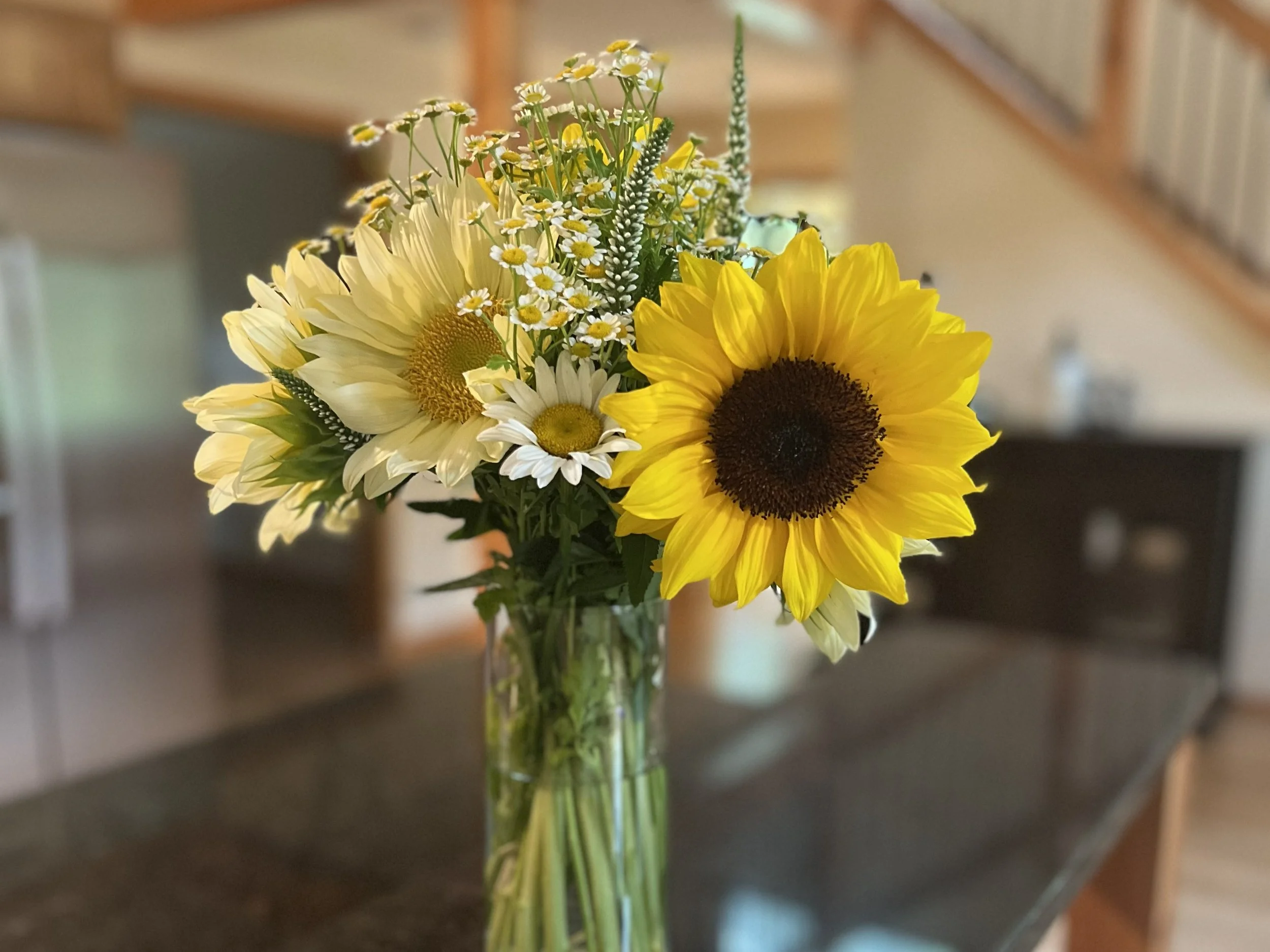
Sunflowers are straightforward to care for but a few things make a real difference in how long they last.
Trim the stems at an angle before placing in water and repeat every couple of days
Use a clean vase and fill it generously. Sunflowers drink more than most cut flowers
Change the water daily if possible, or every two days at minimum
Keep them away from direct sunlight, heat vents, and ripening fruit, which releases ethylene gas and shortens vase life
Remove any leaves that fall below the waterline
If the heads begin to droop, re-cut the stems and place them in fresh cool water
If the sunflower is cut at the right stage and is cared for after it has been cut, it will last seven to ten days in the vase. Some of ours have gone longer.
August at the Farm
August is when the sunflowers are at their most generous. The succession plantings we put in through early summer are all coming in now and the field has that particular quality it only has at this time of year—full, warm, buzzing with activity, everything at once.
We keep a limited number of bouquets available each week and sunflowers are part of almost everything we're putting together right now. If you'd like something set aside, pre-orders make pickup simple. And as always, each bouquet purchased helps us share flowers beyond the farm.
