

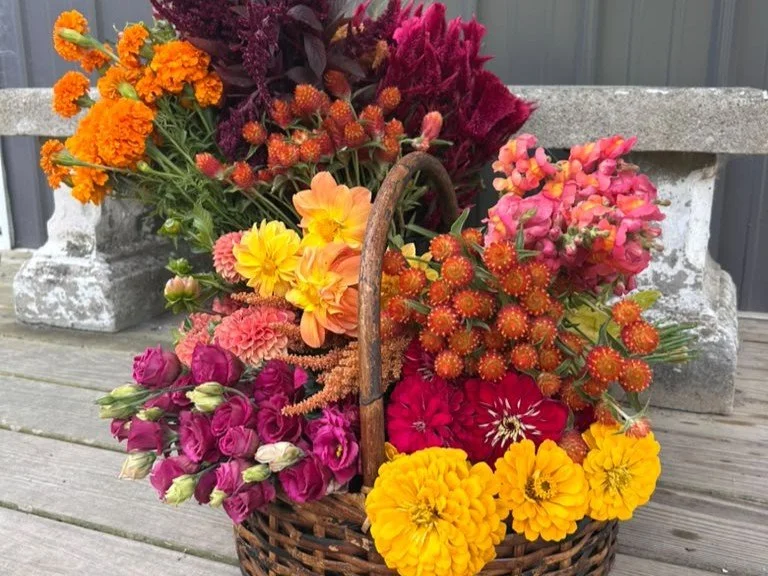
I’ve always been interested in the stories behind the plants we grow, including where they originated, how they came to be cultivated and what they’ve meant to people over time. Flowers have been part of celebrations, ceremonies and everyday life for centuries, and some have acquired surprisingly different meanings depending on where you happen to live.
During the Victorian era, the language of flowers became enormously popular. People consulted floral dictionaries to select flowers that supposedly communicated everything from affection and admiration to jealousy and rejection. The difficulty, of course, was that these dictionaries didn’t always agree, so a perfectly innocent bouquet could send a rather unfortunate message if the recipient happened to own a different edition.
The Smithsonian Gardens’ history of the language of flowers offers an interesting look at the tradition, including the elaborate bouquets and decorative holders people used to exchange floral messages.
Some of the most interesting examples involve flowers we associate with autumn, when the garden is changing and the last blooms of the season are taking their turn.
Chrysanthemums
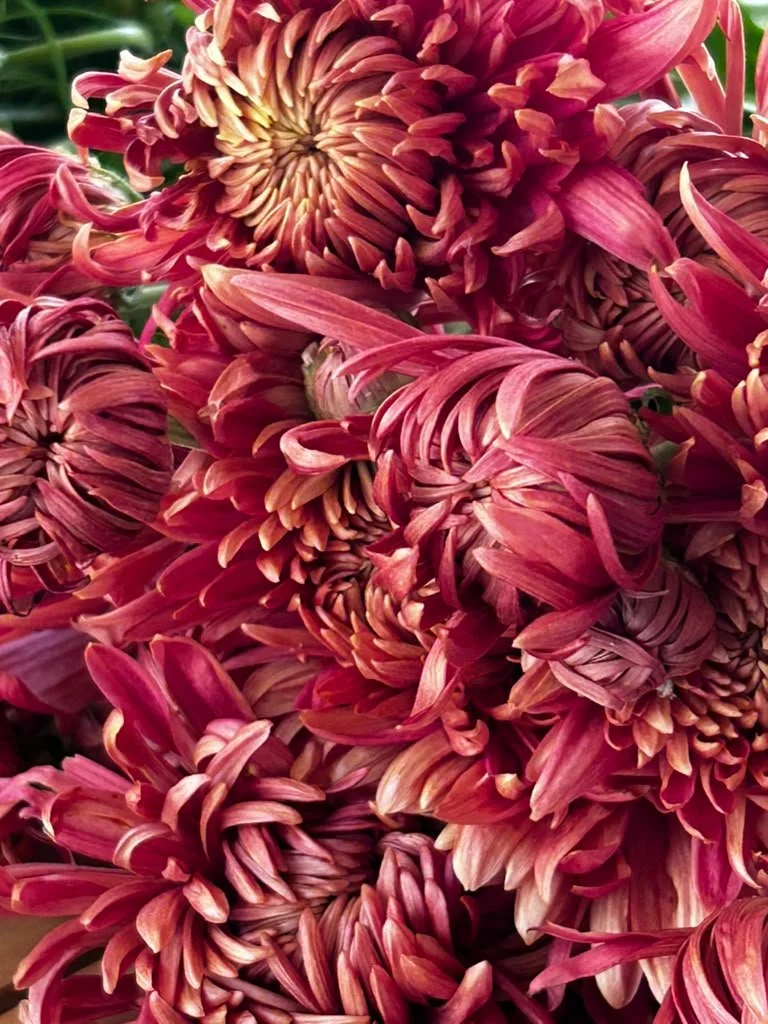
Chrysanthemums might be the best example of how differently one flower can be understood around the world.
In China, chrysanthemums have been celebrated in poetry, painting and gardening for centuries. They’re one of the Four Gentlemen of traditional Chinese art, alongside plum blossoms, orchids and bamboo, and are associated with qualities such as integrity, endurance and longevity.
In Japan, the chrysanthemum has a long association with the imperial family, appearing on the imperial crest and in ceremonial traditions.
Travel to parts of Europe, however, and the meaning changes considerably. In France and several neighboring countries, chrysanthemums are strongly associated with remembrance and are traditionally placed on graves, particularly around All Saints’ Day.
Here in the United States, we tend to think of chrysanthemums as cheerful autumn flowers, appearing in enormous pots on porches alongside pumpkins and other fall decorations.
I find it interesting that the same flower can be associated with longevity, imperial tradition, remembrance and front-porch decorating, depending entirely on where it’s growing.
Dahlias
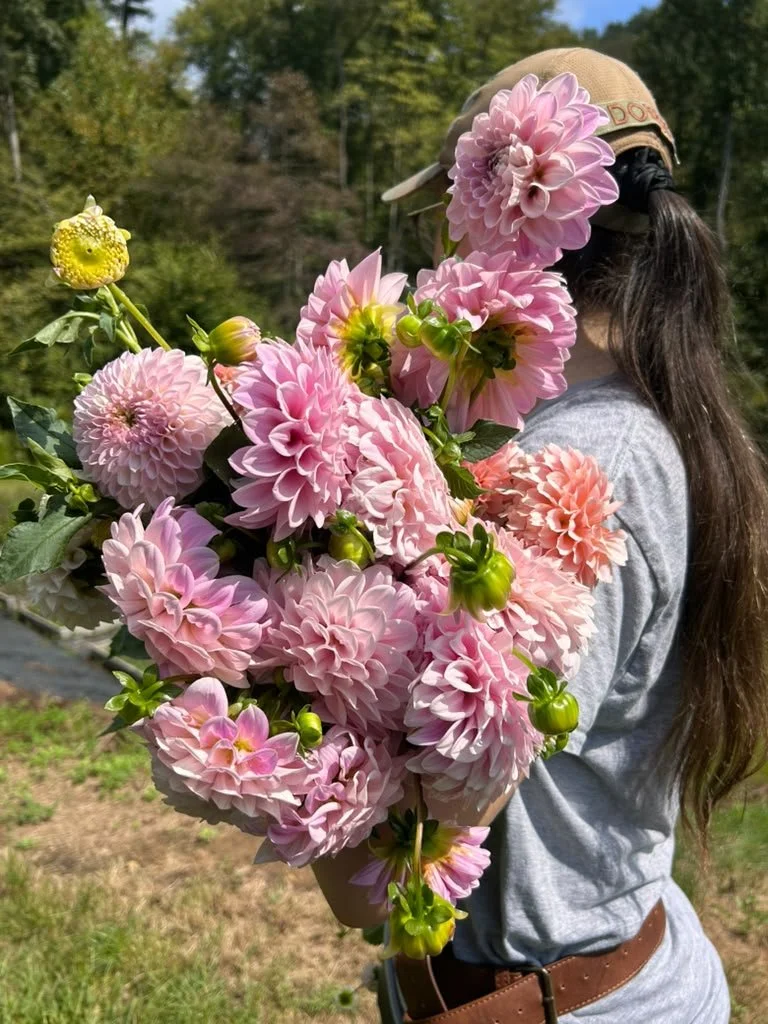
Dahlias originated in Mexico and Central America, where they were cultivated long before they became fashionable in European gardens. They arrived in Europe in the late eighteenth century and eventually became enormously popular with gardeners and plant collectors.
Over time, dahlias acquired associations with elegance, dignity and commitment in various flower-language traditions. Today they’re also commonly linked with strength and lasting relationships, although these meanings aren’t universal or particularly ancient.
What I find more interesting is their history in Mexico, where dahlias were valued for more than their appearance. Indigenous communities used them for ornamental, culinary and medicinal purposes long before European botanists began collecting them.
In 1963, Mexico officially recognized the dahlia as its national flower, reflecting its botanical and cultural importance. Mexico’s Secretariat of Agriculture has a lovely account of the dahlia’s history, including its uses before European colonization.
At BloomSky, dahlias are among the flowers I most look forward to each season. Their variety is extraordinary, from little pompons to enormous dinner-plate blooms, and some of our most beautiful flowers arrive just as summer is giving way to autumn.
Sedum
Sedum, particularly the autumn-flowering varieties often called stonecrop, is an interesting addition to the late-season garden. Many of the familiar varieties, now classified botanically as Hylotelephium, produce broad clusters of tiny flowers that gradually deepen from pink to burgundy as autumn progresses.
Various stonecrops have appeared in European folklore, including traditions of growing them on rooftops, where they were believed to offer protection against lightning and other misfortunes. Modern flower-symbolism guides often associate sedum with resilience, tranquility and endurance, although those meanings aren’t necessarily part of the older traditions.
It’s easy to see why those associations developed. Many stonecrops thrive in dry, rocky conditions and tolerate circumstances that would challenge less adaptable plants. Their flowers also provide nectar for late-season pollinators, making them valuable additions to autumn gardens.
Asters
The name aster comes from the Greek word for star, a reference to the flower’s radiating petals.
Asters have appeared in European mythology and folklore for centuries, although many of the specific meanings assigned to them today come from later flower-language traditions. Patience, affection and remembrance are among the associations you’ll encounter, depending on the source.
Here in Ohio, our native asters are particularly lovely in autumn. They bloom when many summer flowers are finishing, and they’re valuable late-season resources for bees and other pollinators.
I enjoy seeing them along woodland edges and roadsides, where their lavender, blue and white flowers appear among the changing foliage. They may be smaller and less showy than some cultivated flowers, but a good patch of asters in the autumn sunshine is a beautiful thing.
Marigolds
Marigolds have some of the richest and most recognizable cultural traditions of any flower on this list.
In Mexico, the orange and yellow Tagetes marigolds known as cempasúchil are closely associated with Día de los Muertos, when families honor and remember loved ones who have died. Their brilliant colors and distinctive fragrance are traditionally believed to help guide returning spirits, and the flowers appear on altars, graves and pathways.
It’s a tradition of remembrance, but also of family, hospitality and reunion.
Marigolds are also widely used in Hindu religious and cultural celebrations in India, including festivals, weddings and temple offerings. Garlands of marigolds are a familiar sight, associated with welcome, celebration and auspicious occasions.
These traditions developed in different cultural settings, and I wouldn’t try to reduce them to one universal meaning. What I find particularly interesting is how a familiar garden flower can become such an important part of a community’s celebrations.
Cosmos
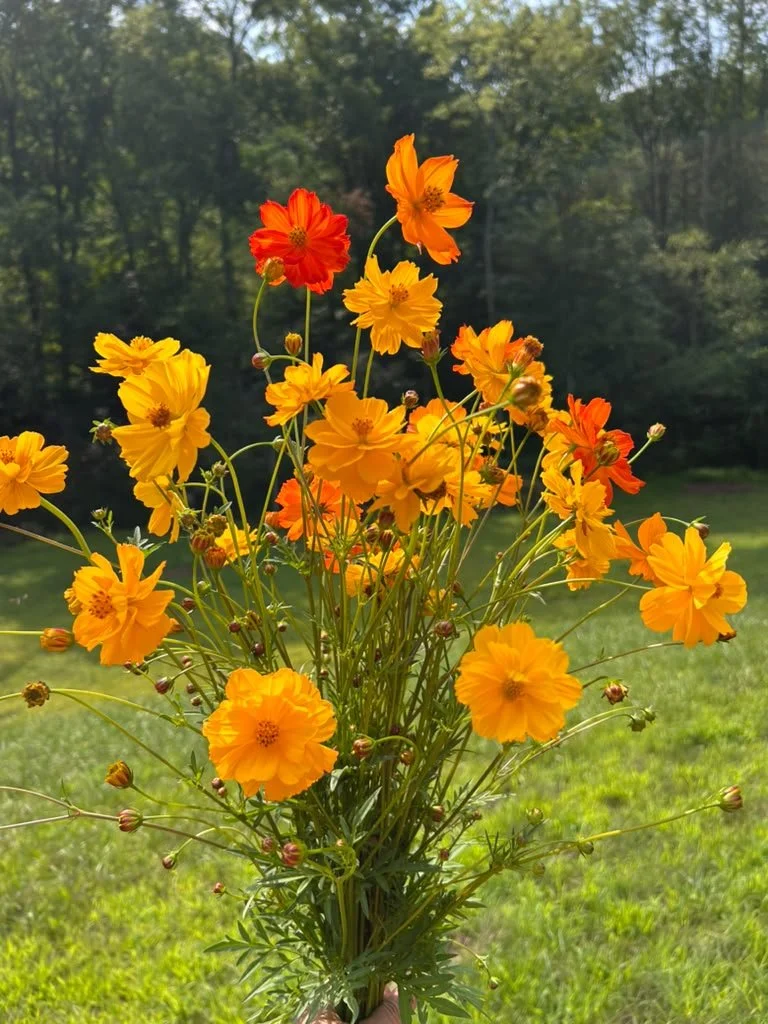
Cosmos have a lighter, more delicate appearance than many of the flowers we associate with autumn. Their slender stems move constantly in the breeze, and their simple, open blooms seem particularly at home in a less formal garden.
The name cosmos comes from the Greek word kosmos, associated with order and harmony. Modern flower-language guides often connect cosmos with peace, balance and simplicity, although these are better understood as interpretations than ancient traditions.
Cosmos are native to the Americas, with several popular garden species originating in Mexico.
I love their movement in the field, particularly when they’re planted in generous groups. They have a wonderfully relaxed appearance that contrasts with the much more substantial shapes of dahlias and cockscomb celosia.
Japanese Anemones
Japanese anemones are among the loveliest flowers for that period when summer is winding down and autumn is beginning to settle in.
Despite their common name, the garden plants we call Japanese anemones have a more complicated history, with ancestry in East Asia, particularly China, and a long history of cultivation in Japan.
Anemones more broadly have acquired associations with anticipation, fragility and forsaken love in Western flower-language traditions, but I wouldn’t automatically assign those meanings to Japanese anemones as though they came from a single historical source.
Their appearance is particularly appealing. The flowers are held above the foliage on slender stems, often in shades of white or pink, and they move beautifully in the breeze. They’re especially lovely in woodland gardens, where their late-season blooms provide color after many other perennials have finished.
Celosia
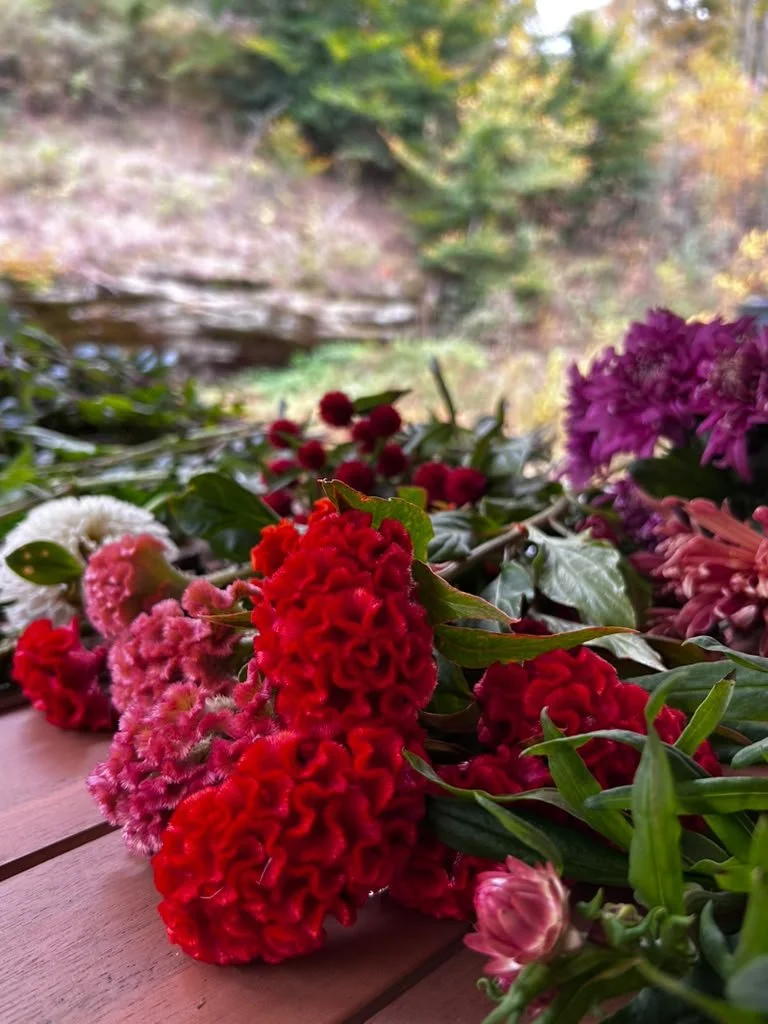
Celosia is one of the more unusual flowers we grow at BloomSky. Depending on the variety, its blooms can resemble flames, feathers, coral or, in the case of cockscomb, something remarkably close to a brain.
The name comes from the Greek word kelos, meaning burning, a reference to the appearance of its flame-like flower heads.
Celosia has a long history of cultivation, including its use as a leafy vegetable in parts of Africa and Asia. The National Academies’ book Lost Crops of Africa includes a fascinating chapter on celosia and its importance as a food plant, something many people who grow it ornamentally may never have considered.
Modern flower-symbolism guides sometimes associate celosia with boldness, warmth or affection, although I haven’t found a compelling reason to present those interpretations as longstanding cultural traditions.
This year was my first growing cockscomb celosia, and I was delighted by how well it worked in bouquets. I used it in a very special bridal bouquet recently, and its substantial, velvety form helped anchor the arrangement beautifully.
The bees love our celosia, too, and blessedly, the deer don’t seem particularly interested in it. Given the wildlife challenges we’ve had this season, that’s a quality I appreciate almost as much as the flowers themselves.
What Flowers Mean to Us
Researching flower symbolism is interesting partly because the meanings aren’t always what you’d expect. A flower associated with happiness in one country might be reserved for mourning in another, while a meaning presented as ancient tradition may turn out to have originated in a nineteenth-century floral dictionary.
I think that’s worth remembering when we give flowers. Their history can add something lovely to a gift, particularly when a flower has a genuine connection to someone’s family or cultural traditions. But flowers also acquire meanings through our own experiences.
A particular dahlia might remind someone of their grandmother’s garden. Marigolds might bring back memories of a family celebration. A flower used in a wedding bouquet may become special to the couple for reasons that have nothing to do with its entry in a Victorian dictionary.
Those personal associations are every bit as interesting to me as the historical ones, and they’re part of why I enjoy growing flowers for people in the first place.
