

Flower Focus: Dahlias
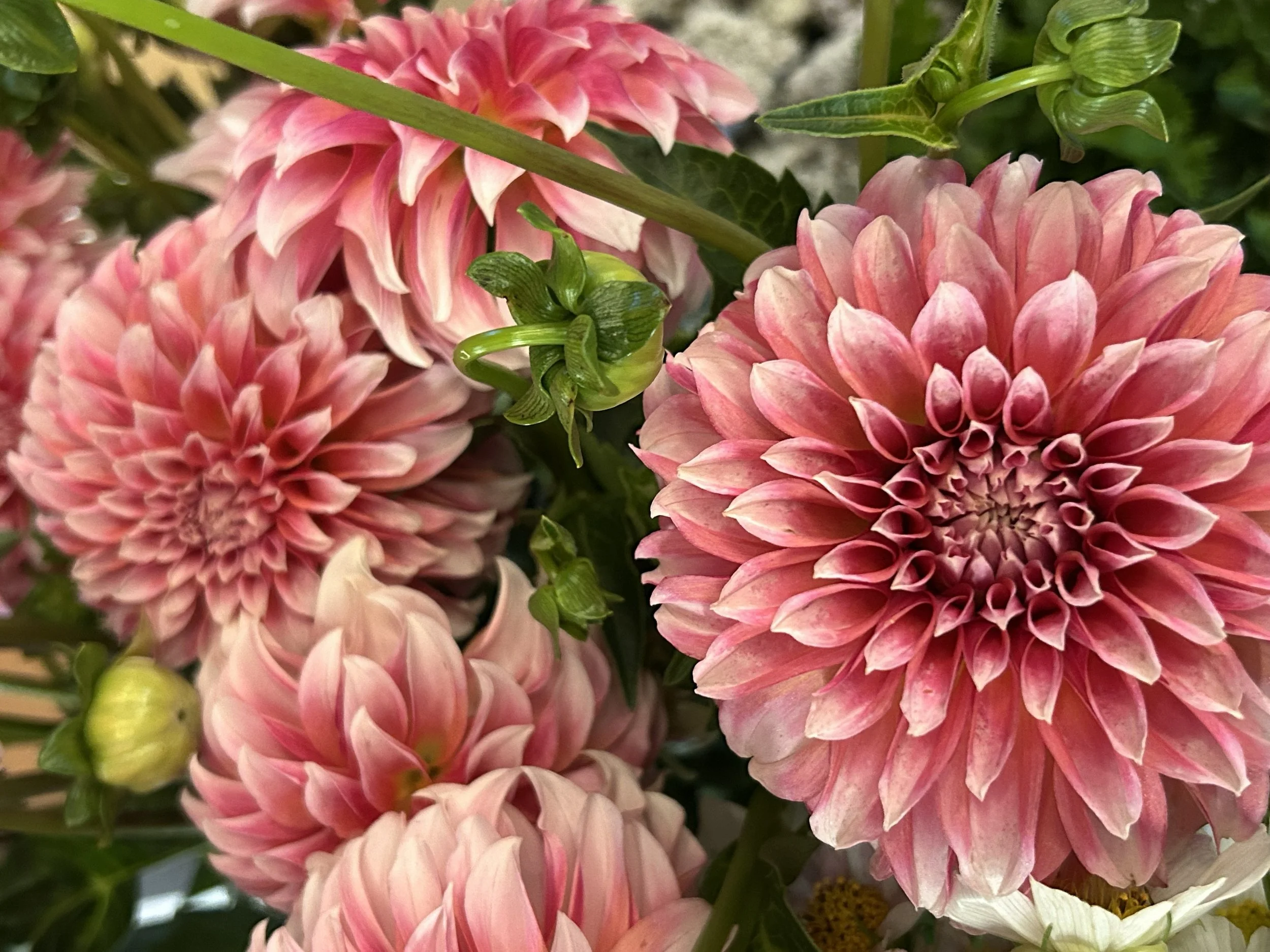
August and September are the months that dahlias take over the farm. Not that I’m complaining about it because the dahlias just make the field look so gorgeous. Just when everything else has bloomed, looks tired or has already been cut down, the dahlias start to be at their fullest, most confident stage. There’s color everywhere, their stems are strong, and new buds still push up faster than we can keep track of them. They carry the farm through the end of summer and well into fall, and every year I'm grateful for how much beauty they give in that stretch of time.
This month for Flower Focus, we’ll be talking about dahlias. The types, the colors, how we grow and harvest them, and how to take care of them once they're with you at home.
A Flower With a Long History
Dahlias are native to Mexico and Central America, where they grow as tuberous perennials in the highland regions. The Aztecs cultivated them for food, medicine, and ceremonial purposes long before Spanish botanists brought them to Europe in the late eighteenth century.
Once they arrived in Europe, dahlias became the subject of intense horticultural interest and breeding. By the nineteenth century, thousands of varieties existed, to the point where groups dedicated to documenting and classifying them had formed across England and the Netherlands. That careful classification is part of why dahlias today are organized into more distinct forms than any other cut flower.
In the language of flowers, dahlias carry associations with elegance, commitment, and the idea of standing strong through change. They bloom when much of the garden is fading which makes the timing feel meaningful.
The Main Varieties of Dahlias
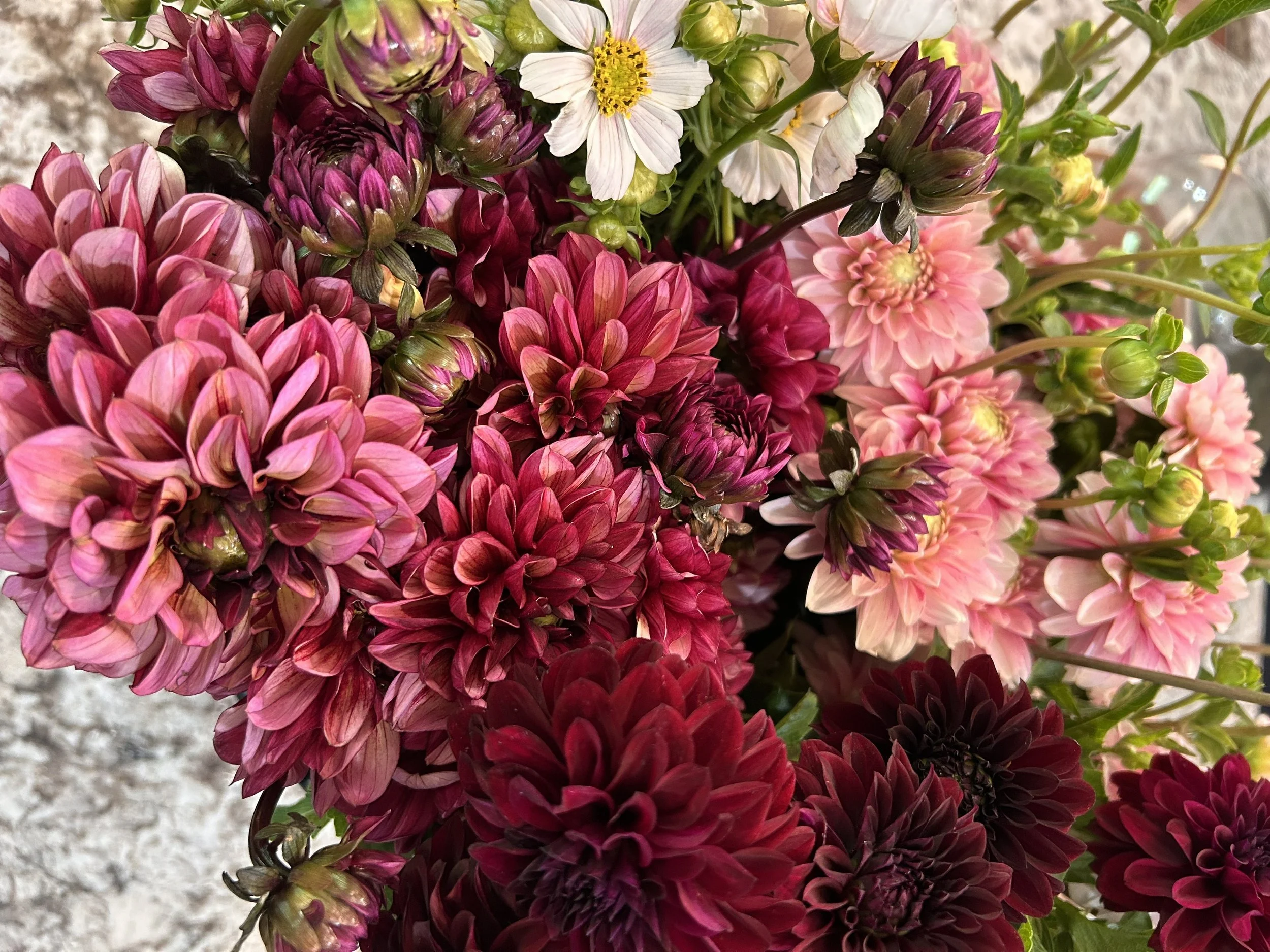
Part of what makes dahlias fun to grow is the sheer range of colors and varieties. The color palette runs from the palest white and softest blush through every shade of yellow, coral, orange, red, burgundy, and deep purple. There are also bi-colored varieties, ones with petals that fade from one color to another, and some that shift in tone as they wilt.
Here are the most well-known forms and are commonly grown for cutting:
Ball Dahlias
Perfectly round and densely petaled, ball dahlias are exactly what the name suggests. The petals are rolled at the tips and packed tightly inward, creating a globe shape that holds its form well in arrangements. If you have a sense of humor, you'll notice they can look like a muppet. They come in a wide range of colors and sizes, and their clean, geometric quality makes them one of the most versatile dahlias formixed arrangements.
Pompon Dahlias
These are similar to ball dahlias but they’re smaller. Pompon dahlias are usually under two inches across. What they lack in scale they make up for in density and charm. A few stems of pompon dahlias in a vase are darling little puff balls. They're also one of the longer-lasting dahlia types once cut.
Decorative Dahlias
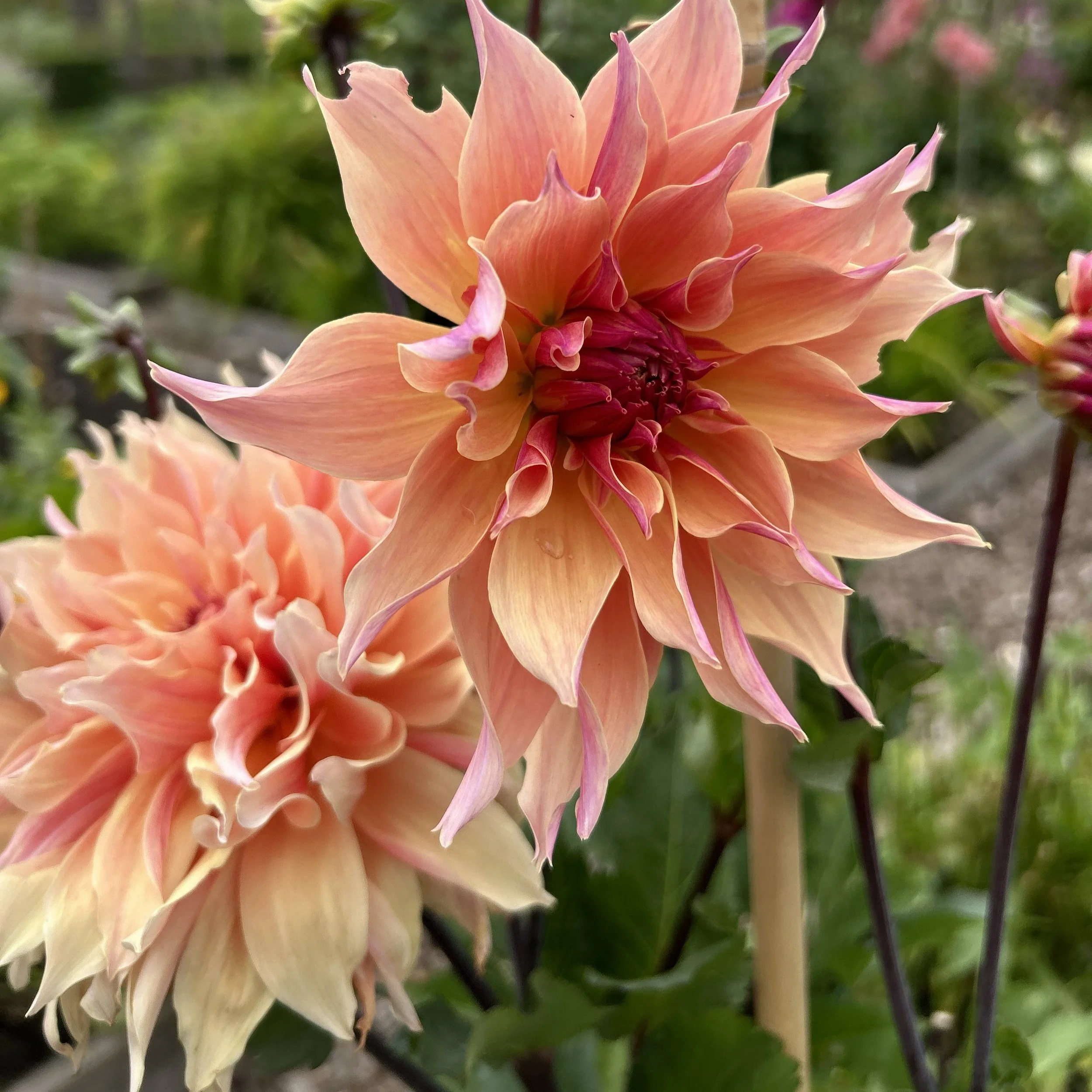
Decorative dahlias have broad, flat petals arranged in multiple rows, creating a full, open face. They're less geometric than ball types and carry a softer, more garden-like quality. This is one of the most widely grown dahlias for cutting because they come in a wide range of colors and sizes.
Dinner Plate Dahlias
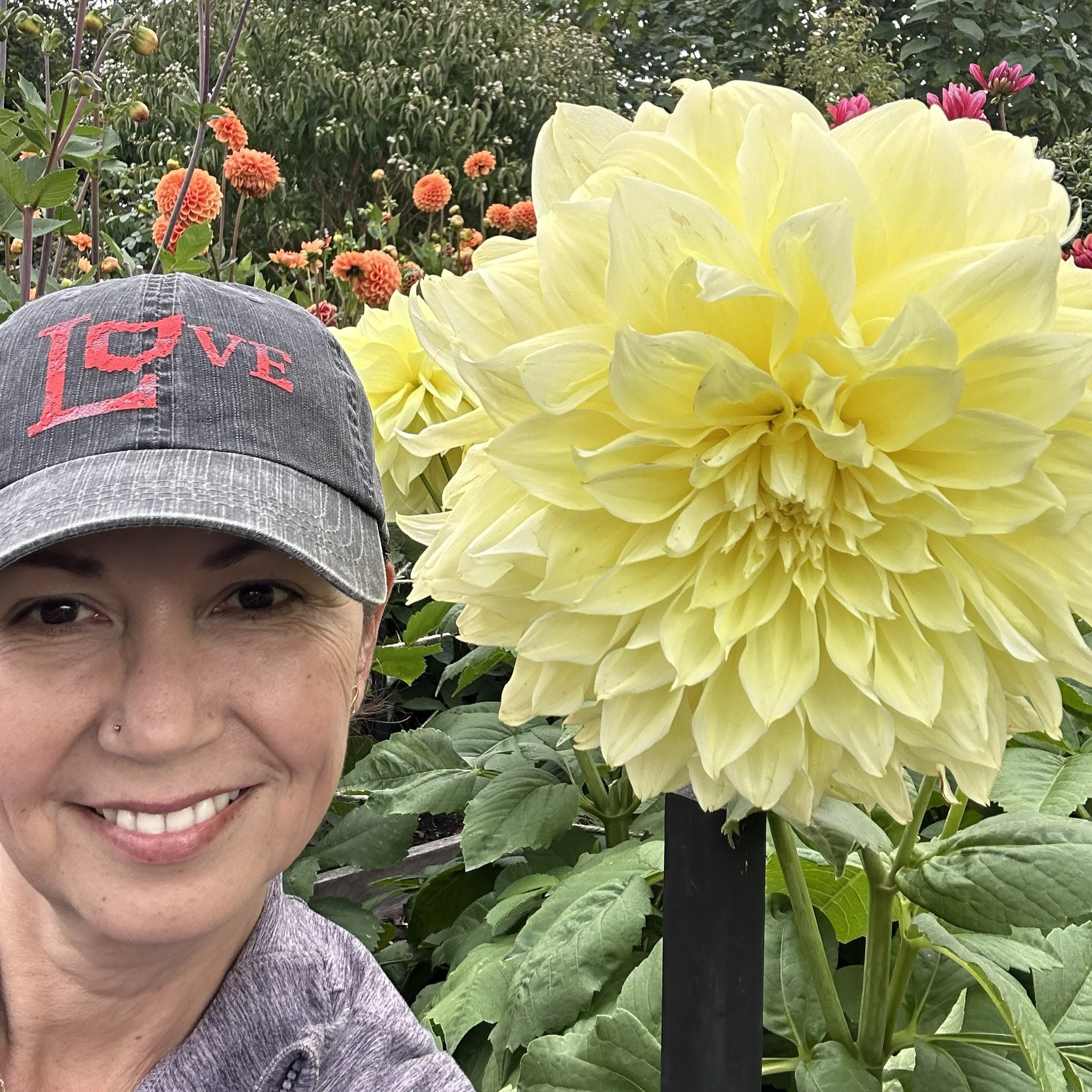
The dinner plates are the ones that grab attention. These are the large-headed varieties. The blooms can reach ten inches or more across and they have broad, layered petals and a presence that can make an arrangement look full. They photograph well, they hold their shape, and they have a scale that only a few other flowers can match. We don't grow many since they are actually a challenge to arrange with when so many other options are available.
Cactus Dahlias
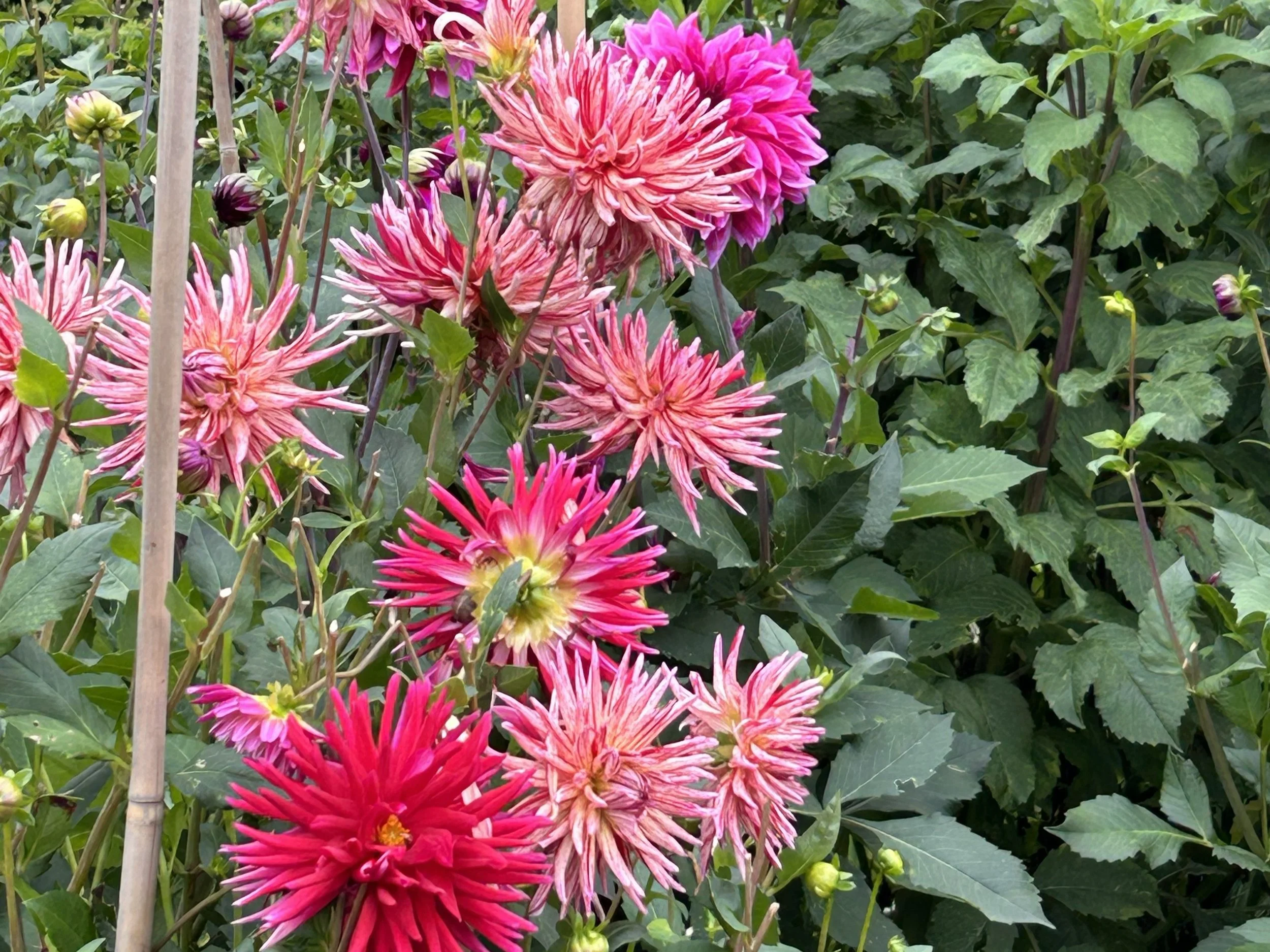
Cactus dahlias have pointed, rolled petals that give them a spiky, textural quality that looks so different compared to the rounder types. They add movement and a certain wildness to arrangements that the more formal varieties don't.
How We Grow and Harvest Dahlias at the Farm
We "wake" our tubers in early April in the grow room. The tubers are placed in trays of soil on a special lighting schedule until we see sprouts. Once the sprouts are about 3-4 inches tall, we begin to harden them off in preparation for field planting. In Ohio, that gives us a window that runs roughly from May through October, with September being the peak.
We pinch the plants early in the season, removing the central growing tip when the plant is young. It feels counterintuitive because you're cutting back something that's just getting started. But pinching encourages the plant to branch, which means more stems and more flowers over the long run.
Like zinnias, we harvest dahlias once they’re fully open, unlike other cut flowers where you cut at the bud stage. A dahlia that isn't fully open when cut often won't open further. The trade-off is a slightly shorter vase life than you'd get with a bud-cut flower, but the visual payoff is worth it.
After cutting, stems go into water immediately. Dahlias are particular about hydration and they make the consequences clear quickly if they don't get it ASAP.
At the end of the season, after the first frost kills the foliage, we dig the tubers, cure them, and store them through winter to replant once spring rolls in. A well-stored tuber will produce a bigger, floriferous plant the following year. I find it to be one of the more fascinating cycles in the field, especially since a stored dahlia tuber is pretty uninspiring.
How to Care for Dahlias at Home
Dahlias have a reputation for being fussy in the vase. They can be, but most of the difficulty comes down to a few manageable things.
Trim the stems at an angle and place in water immediately. Dahlias don't tolerate being dry.
Use a clean vase and change the water every one to two days.
Keep them away from heat, direct sunlight, and ripening fruit.
Remove any leaves below the waterline to keep the water clean.
Re-cut the stems every couple of days at an angle.
Expect five to seven days of vase life from a well-conditioned stem cut at the right stage.
Some dahlia varieties last longer than others. Ball and pompon types tend to last the longest. Dinner plates, for all their drama, are among the shorter-lived once cut.
August at the Farm
This is the month we've been building toward since we put the tubers in the ground in May. The dahlias are about at their peak and they'll stay that way through October.
We keep a limited number of bouquets available each week, and dahlias are central to almost everything we're cutting right now. If you're planning around a specific date, pre-ordering makes things simple. And as always, each bouquet purchased helps us share flowers beyond the farm.
