

Flower Focus: Statice
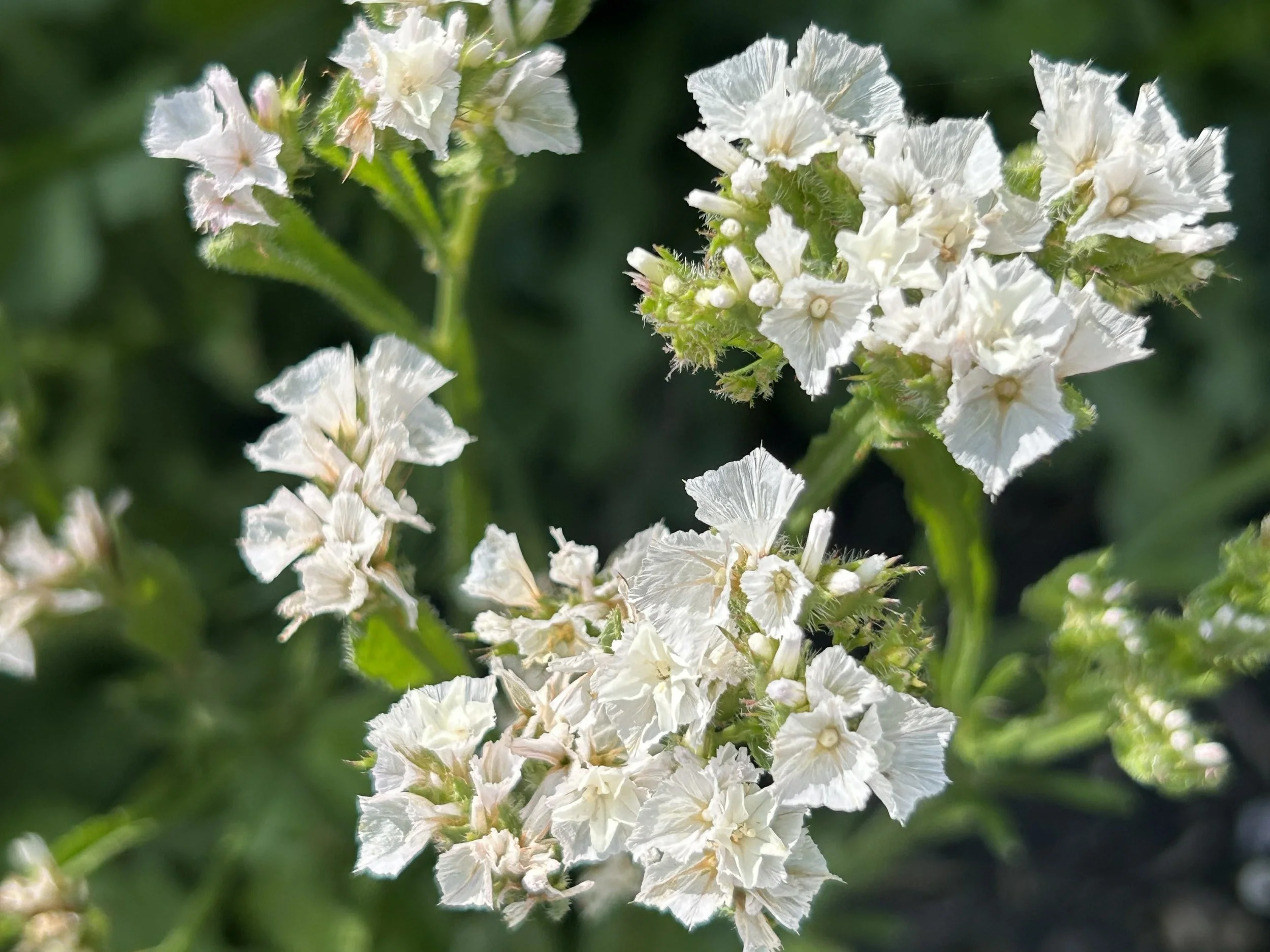
I'll admit it—I didn't really like statice before I became a flower farmer.
Every bouquet I'd ever seen it in looked like it had been sitting around a little too long. It always seemed dry and papery, almost like it belonged in a dried arrangement more than a fresh one. I never would have chosen it on purpose.
Then, in 2023, I planted a small test patch in one of my trial beds and the fresh statice turned out to be nothing like I expected. The tiny flowers catch the light in a way that never comes through in bouquets that have been shipped halfway across the world. One of my favorite varieties is called 'Forever Silver,' and we’re growing loads of it this year. In the early morning light, it reminds me of little stars. It's airy without feeling fragile and adds structure around larger focal flowers without competing with them.
Last week I designed a bouquet for FosterHub in Logan as a gift to celebrate their grand opening. It had only four ingredients: peonies, statice, scented geranium and daucus. It was simple, elegant and full, and while the peonies were stunning, it was the statice that tied everything together. I'm still kicking myself for not taking a picture before it left the farm.
What Is Statice?
Statice belongs to the plumbago family and is native to the Mediterranean and parts of central Asia. It grows in branching clusters of tiny papery blooms in shades of purple, lavender, white, yellow, and pink. The flowers themselves are quite small, but they grow in such dense, airy sprays that a single stem adds considerable volume and visual texture.
It has been used in floral arrangements for well over a century, which says something about its staying power. It isn't a trend. It's a staple.
Why We Grow Statice
The flowers aren't the only ones that appreciate statice. The bees absolutely love them. On summer mornings, the bees are humming with activity as soon as the sun reaches the field, which means I have to harvest around them. Better yet, the rabbits, deer and groundhogs mostly leave it alone—something that can't be said for much else in the field this year. Even my dahlias have become an unexpected buffet.
These days, statice has become one of those flowers I quietly depend on. It adds texture, softens the edges of a bouquet and somehow makes everything around it look just a little better. It's still considered a filler flower, but I think that's selling it short.
Plus, it’s one of the more forgiving things in the field. It is drought tolerant and handles heat well, which matters in an Ohio summer when temperatures climb and some of the more delicate flowers start to struggle. It asks for relatively little and gives back consistently, which is exactly the kind of plant a working farm depends on.
It also has a long cutting window. Once it starts producing, it keeps going through the warmer months, which means it's available to us across multiple seasons rather than in a single narrow window like some of the spring flowers. That reliability is part of why it earns its space in the field year after year.
What Statice Does in a Bouquet
This is where statice earns its place most visibly. The papery texture of the blooms adds something that softer flowers can't. It offers a kind of visual contrast that makes the larger blooms around it stand out more. Place statice next to a ranunculus or a garden rose and both flowers look better because of it. The delicate clusters fill negative space without adding heaviness, and the color, whether it's the classic purple or the softer white varieties, tends to complement rather than compete.
It adds so much character to a flower arrangement. That might sound like a simple thing to say about a filler flower, but it's the most accurate one. Arrangements built without it often feel like they're missing something, even when you can't immediately name what.
A Flower That Stays
One of the more remarkable qualities of statice is how well it dries. Most cut flowers have a natural end point. Statice doesn't behave that way. Left in a vase without water, or hung upside down in a dry room, it holds its color and form for months. The papery texture that distinguishes it fresh is the same quality that makes it so well suited to drying. What you have in a summer bouquet can become part of a dried arrangement that lasts through winter.
We've had customers tell us they still have statice from arrangements they received months ago. It retains color, shape, and that particular airy quality that made it very pretty and valuable in the first place. Not many flowers can achieve that.
A Note on Care
Statice is low maintenance once it's in the vase, but a few things help it last.
Trim the stems at an angle before placing them in fresh water.
Remove any foliage that falls below the waterline.
Change the water every two days to keep it clean.
To dry, remove from the vase while still fresh and hang upside down in a cool, dry spot away from direct sunlight.
Once fully dried, no further care is needed. It will hold on its own.
Why It’s Worth Noticing
Sometimes the flowers doing the quietest work end up becoming your favorites. Statice has been in bouquets for generations because it earns its place every single time. May it be in fresh arrangements and dried ones, in summer heat and through the long stretch of winter.
It doesn't ask you to notice it. But once you do, you'll start looking for it.
